Ontario's most damaging rainfall events and the power outages that accompany them arrive together, not separately. A primary sump pump that runs on household electricity provides no protection the moment the power goes out. The pump sits idle in a filling pit while water rises, and in the basement flooding scenario the pump was installed to prevent unfolds without any mechanical resistance.
This is not a rare edge case. It is the standard pattern for severe weather events in the GTA. The Insurance Bureau of Canada consistently identifies power-outage-related sump pump failure as a contributing factor in a significant share of residential basement flooding insurance claims in Ontario. A sump pump battery backup system addresses this gap directly by providing an independent power source that activates automatically when household electricity is interrupted.
Galaxy Plumbing's team installs sump pump battery backup systems across the Greater Toronto Area as part of every new sump installation recommendation and as a retrofit to homes with existing primary pumps. Our Toronto plumbing team and Etobicoke plumbers see the difference a backup system makes in homes that have it versus those that do not when a storm rolls through.
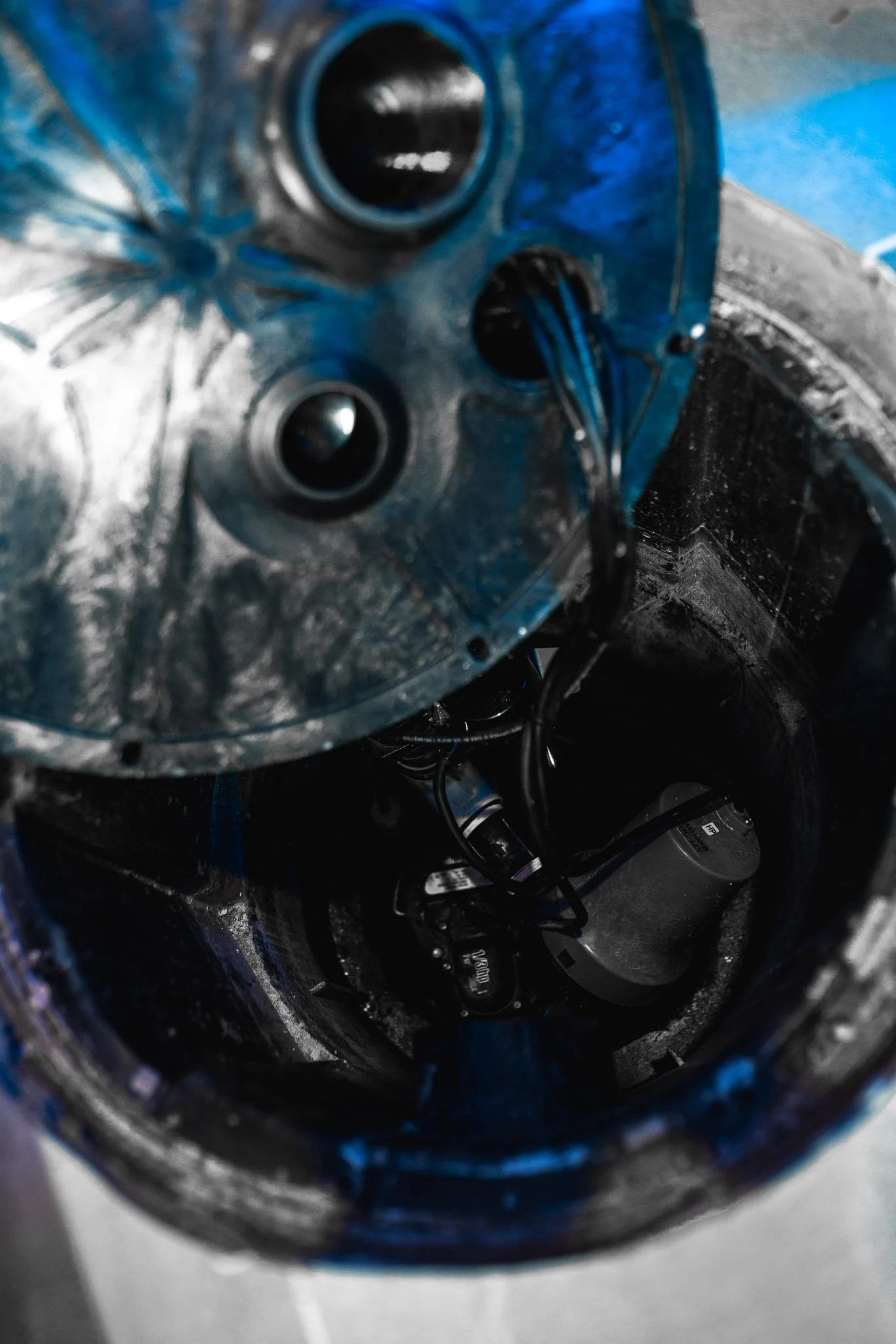
A battery backup sump system consists of a secondary pump, a 12-volt deep-cycle marine or AGM (absorbent glass mat) battery, a battery charger that keeps the battery topped up during normal operation, and a float switch that activates the backup pump independently of the primary.
During normal operation, the primary pump handles all water removal and the battery charger maintains the backup battery at full charge. When power is interrupted, the primary pump stops. If water continues rising in the pit, the backup pump's float switch triggers and the backup pump begins operating on battery power, removing water from the pit and discharging it through the same line as the primary pump or a dedicated secondary discharge.
Some systems also activate when the primary pump fails mechanically during normal power conditions, providing protection not only against outages but against primary pump motor failure during a rainfall event.
The most common sump pump battery backup configuration uses a standard 12-volt deep-cycle marine battery. These batteries are widely available, relatively affordable at $80 to $200 depending on capacity, and provide enough energy to run a backup pump for several hours of continuous operation or longer in intermittent-cycle scenarios. They require periodic replacement, typically every 3 to 5 years, and need annual testing to confirm they hold a charge under load.
Absorbed glass mat batteries are a sealed, maintenance-free alternative to standard lead-acid batteries. They charge faster, tolerate more frequent charge and discharge cycles, and are less susceptible to failure from temperature extremes in an unheated basement. AGM batteries cost more upfront, typically $150 to $350, but offer a longer service life and lower maintenance burden. For homeowners who want a set-and-test-annually approach, AGM is the superior option.
Water-powered backup sump pumps use municipal water pressure rather than electricity or battery power to drive an ejector mechanism that removes water from the pit. They never run out of charge, require no battery maintenance or replacement, and activate automatically during any power failure. The trade-off is water consumption: a water-powered backup uses approximately 1 litre of municipal water for every 2 litres of pit water it removes.
Water-powered backups are not suitable for homes with well water, homes where municipal water pressure is inconsistent, or properties under municipal restrictions on water use. Where they are applicable, they are an effective long-term, low-maintenance solution. A licensed plumber assesses water pressure suitability before recommending this option.
Purpose-built combination units integrate the primary pump and battery backup into a single assembly with a shared controller. These systems simplify installation, provide coordinated float switch management, and typically include an alarm that alerts the homeowner when the backup is in use or the battery charge is low. They carry a higher upfront cost but reduce installation complexity and provide a more unified protection profile.
The backup pump must be capable of handling the water inflow rate your pit experiences during a storm. Most standard backup pumps are rated at 1,500 to 2,500 gallons per hour, which is adequate for the majority of residential Ontario basements. Homes in low-lying areas, near watercourses, or with known high water table conditions should be assessed for a higher-capacity backup unit. A plumber who has inspected the primary pump's operating frequency during wet seasons can advise on appropriate backup capacity.
Runtime depends on battery capacity (measured in amp hours) and how frequently the backup pump cycles. A 75 amp hour battery powering a backup pump that cycles every 5 minutes in peak conditions provides roughly 5 to 8 hours of protection. A 100 amp hour battery in the same conditions extends that to 7 to 12 hours. For extended outages, a higher-capacity battery or a generator is the appropriate complement.
A quality backup system includes a visible or audible alarm that activates when the backup pump engages, when the battery charge drops below a safe threshold, or when the primary pump fails. Some modern systems include a smartphone notification capability that alerts you remotely. For homeowners who travel or whose basement is not regularly accessed, remote monitoring provides a meaningful additional layer of protection.
The battery charger that maintains the backup battery is as important as the battery itself. A cheap or undersized charger may keep the battery partially charged but never bring it to full capacity, reducing the effective runtime when the backup is needed. A smart charger that monitors and manages charge cycles correctly extends battery service life significantly.
A sump pump battery backup installation involves securing the backup pump in the pit alongside or below the primary pump, connecting the backup to its dedicated discharge port or a common discharge line with appropriate check valves, mounting the battery and charger at a safe height above the pit water level, setting the backup float switch above the primary pump's trigger level so the backup activates only when the primary fails or is unavailable, and testing the full system by simulating both a power failure and a high-water condition.
The battery must be positioned and secured so it is not at risk of submersion during an extreme pit overflow event. This is a detail that matters in a worst-case scenario and is one of several reasons why a licensed plumber should perform this installation rather than approaching it as a DIY project. For homeowners in Oakville and Mississauga, our Oakville plumbing team and Mississauga plumbers complete backup system installations as standalone retrofits to existing primary pump setups.
A battery backup system that is never tested or maintained degrades silently. The battery loses capacity over time without any visible indication that it can no longer power the backup pump for the runtime you expect. The following maintenance steps keep the system in reliable condition.
For a comprehensive maintenance schedule covering both the primary pump and the backup system, our dedicated sump pump maintenance checklist walks through every step in the order they should be completed. The Canada Mortgage and Housing Corporation also recommends sump pump system checks as part of standard annual home maintenance in Canadian climates.
A sump pump battery backup system and a backwater valve address different but complementary flood risks. The backup system handles groundwater accumulation during power outages. The backwater valve prevents municipal sewer overflow from entering the home through the sewer lateral during periods of heavy rain. The two systems protect against the two most common causes of Ontario basement flooding and are typically installed together for comprehensive protection.
The reliability of a sump pump battery backup system is not tested on an average Tuesday afternoon. It is tested during a severe storm at 2 a.m. when the power is out, the pit is filling, and the consequences of failure are immediate. Choosing the right system, having it properly installed, and testing it on a regular schedule is the difference between that scenario playing out as designed protection and as an expensive, disruptive flooding event.
Galaxy Plumbing installs and services sump pump battery backup systems across the GTA. Whether you are adding a backup to an existing primary pump or having a complete sump system installed for the first time, our licensed team advises on the right specification for your specific home and water conditions. Review how our clients describe working with us on our about us page, or Contact our team to schedule an assessment. For information on Ontario's basement flooding subsidy programs, the City of Toronto's basement flooding protection page outlines eligibility requirements and qualifying systems.
Runtime depends on battery capacity and how frequently the backup pump cycles. A standard 75 amp hour battery powering a backup pump cycling every 3 to 5 minutes provides approximately 5 to 10 hours of protection. A higher-capacity 100 amp hour battery extends that range. Extended outages beyond 12 hours may require a generator supplement or a water-powered backup as an alternative.
Standard deep-cycle marine batteries should be replaced every 3 to 5 years. AGM batteries typically last 4 to 6 years. Both should be load-tested annually regardless of age. A battery that reads acceptable voltage at rest but drops sharply under load has lost effective capacity and should be replaced before the next wet season.
Some homeowners with electrical and plumbing experience successfully install backup systems as a DIY project. However, incorrect float switch placement, inadequate discharge line configuration, improper battery positioning relative to the pit, and charger wiring errors all create failure points that will not be evident until the system is actually needed. A licensed plumber installation provides documented work, correct specification, and a tested system.
Home insurance policies in Ontario do not typically mandate a battery backup sump pump, but some insurers offer premium reductions or improved coverage terms for homes with comprehensive flood protection systems. Contact your insurer to understand whether your current coverage and premium are affected by the presence or absence of a backup system.
A battery backup uses a stored electrical charge to power a secondary pump motor. It provides strong pumping capacity but finite runtime limited by battery charge. A water-powered backup uses municipal water pressure to create suction that removes pit water. It provides unlimited runtime during an outage but consumes municipal water in the process and requires consistently strong water pressure to operate effectively.
Galaxy Plumbing installs sump pump battery backup systems across the Greater Toronto Area with the specification and care that a reliable basement protection system requires. Whether you are retrofitting a backup to an existing primary pump or planning a complete new installation, our licensed team provides a free assessment and transparent quote. Contact us today to schedule your visit.