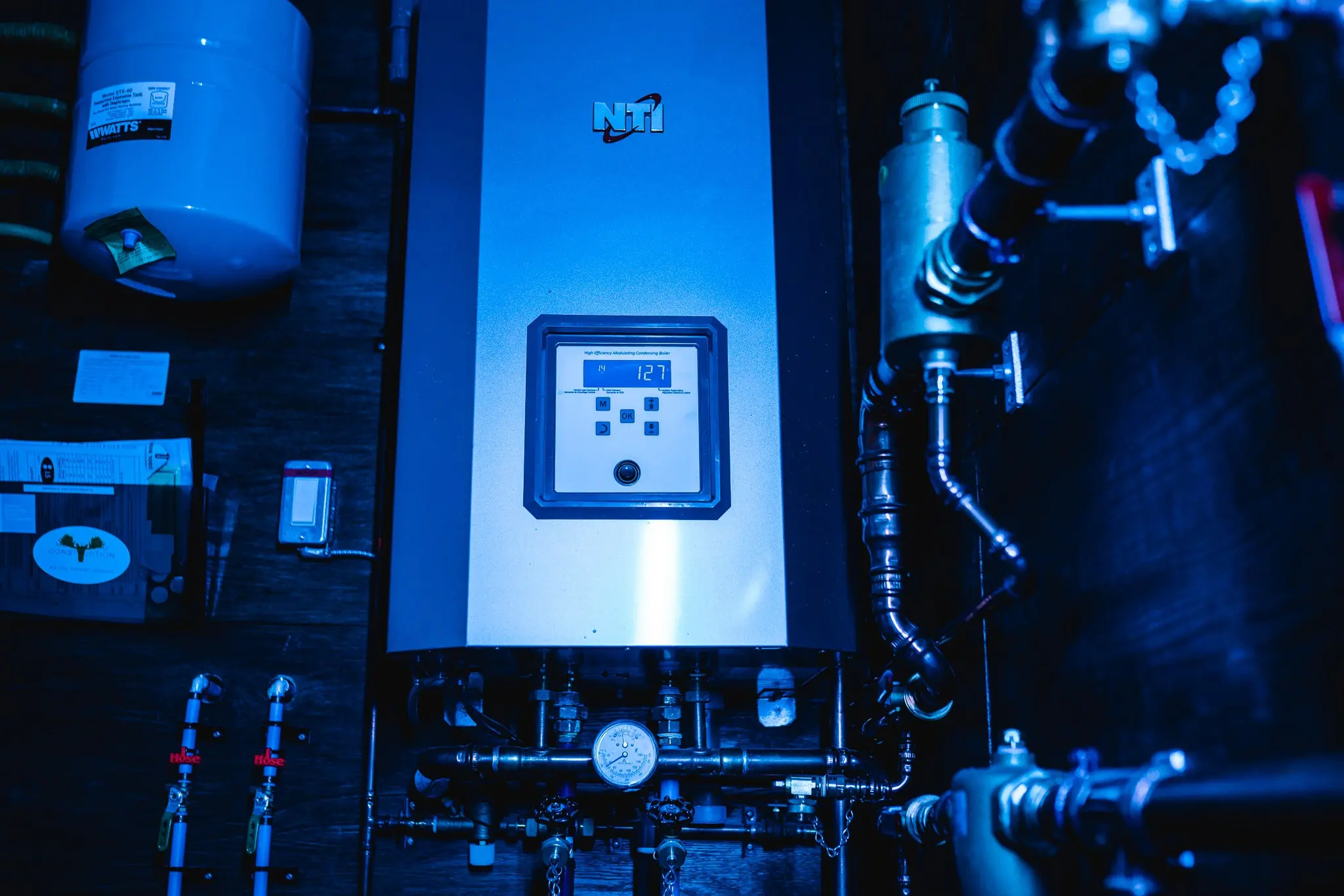
According to Natural Resources Canada, water heating accounts for approximately 17% of total energy use in the average Canadian home. That makes your water heater one of the highest-impact mechanical decisions in the house, not just in terms of comfort but in terms of operating cost over the next 10 to 20 years.
Most homeowners replace a water heater reactively, when the old one fails. That kind of urgency works against you. When you have time to compare the two systems properly, you are far more likely to land on the right fit for your household, not just the fastest available replacement. Our water heater and tankless installation service (/water-heater-tankless-installation) covers both system types across the GTA, and the first conversation is always about what suits the home.
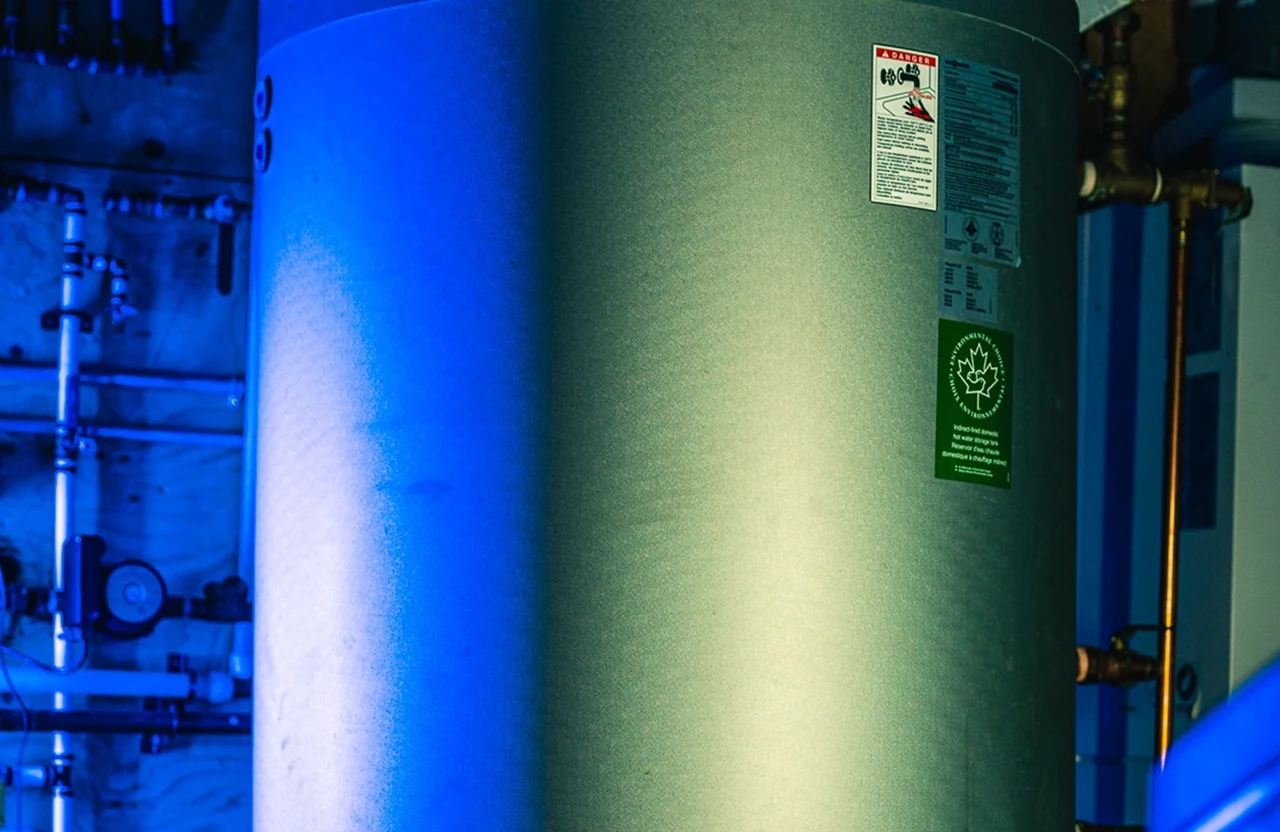
A tank water heater stores 40 to 60 gallons of preheated water in an insulated tank. The burner or heating element cycles on and off to maintain the set temperature around the clock, whether you are using hot water or not. That constant reheating is called standby heat loss, and it is the primary efficiency disadvantage of tank systems.
When hot water demand temporarily exceeds the tank capacity, say two showers running while the dishwasher is on, the stored supply depletes and the incoming cold water drops the temperature until the tank recovers. Recovery time on a gas tank heater is typically 30 to 40 minutes.
A tankless unit heats water directly as it flows through the heat exchanger. There is no stored volume and no standby heat loss. The system fires only when a hot water tap is opened and shuts down immediately when it closes. Flow rates on residential gas tankless units typically range from 7 to 12 litres per minute, which is sufficient for most households running two simultaneous fixtures.
The practical limit of a tankless system is simultaneous demand. If your household regularly runs multiple high-flow fixtures at once, large soaker tubs, multiple showers, and a dishwasher simultaneously, a single unit may need to be sized up or supplemented with a point-of-use unit in a remote bathroom.
Tank water heaters carry a lower installed cost. A standard 40- to 50-gallon gas tank unit in the GTA, including labour, typically falls between $1,200 and $2,000 depending on the tank brand and venting configuration. High-efficiency models with power venting run toward the higher end of that range.
Tankless gas units start at roughly $2,500 installed and can reach $4,000 or more for high-capacity condensing models that require new gas line sizing, upgraded venting, and in some cases a dedicated condensate drain. Electric tankless systems tend to be less expensive to purchase but often require a significant electrical panel upgrade in older GTA homes, which adds cost that many quotes omit upfront.
If you are navigating a water heater failure and trying to decide between the two on a compressed timeline, our team can walk you through an honest installed cost comparison before any commitment is made. Contact Galaxy Plumbing (/contact) to book a same-day assessment across the GTA.
A gas tankless water heater operates at roughly 94% to 98% efficiency on condensing models, compared to 67% to 80% for a standard tank unit. Over a 10-year period, that efficiency difference can translate to meaningful savings on natural gas bills, particularly for households with higher-than-average hot water use.
The calculation is not universal. A single-person household with low hot water demand may not generate enough savings to offset the higher tankless installation cost within a reasonable payback window. A family of four or five with consistent daily demand will typically see a shorter payback period and greater cumulative savings.
Energy Star certified water heaters, both tank and tankless models, may qualify for rebates through the Canada Greener Homes program or Ontario utility rebate programs. Check current eligibility before purchasing, as program availability changes year over year.
Tank water heaters have a typical service life of 8 to 12 years in the GTA. That lifespan shortens with hard water, infrequent flushing, or a failed anode rod that was never replaced. Many tanks fail before the 10-year mark in homes with high mineral content in the water supply.
Tankless units are rated for 20 years or more when properly maintained. Annual descaling of the heat exchanger is the primary maintenance requirement, and it is especially important in areas with hard water. That longer service life means one tankless unit may outlast two tank replacements, a factor worth including in any honest long-term cost comparison.
If you are already seeing early warning signs that your current tank is nearing end of life, our guide on signs your water heater needs replacement (/blog/signs-water-heater-needs-replacement) covers what to watch for before a failure happens.
Tank water heaters require a dedicated equipment space, typically a utility room, mechanical room, or closet with adequate clearance for the tank diameter and service access. In smaller GTA homes, condominiums, or properties where the mechanical room was designed for a compact unit, a 50-gallon tank may not physically fit without relocating the installation.
Tankless units mount on the wall and have a footprint roughly the size of a small suitcase. That compact profile frees up floor space and allows installation in locations where a tank would not fit. However, gas tankless units require direct-vent or power-vent flue runs to the exterior, and the flue configuration in your home may or may not accommodate the required routing without significant additional work.
Homes with older gas supply lines may also require a dedicated higher-capacity line to feed a tankless unit. A licensed plumber should assess both the gas supply size and the venting configuration before quoting installation. A quote that does not include this review is incomplete.
The existing tank is nearing replacement age and the home's gas infrastructure is already sized appropriately.
A third option worth understanding is the combination boiler, which provides both space heating and domestic hot water from a single appliance. For homes with hydronic heating systems, a combi boiler can eliminate the need for a separate water heater entirely. Our boiler and combi boiler services page (/boiler-combi-boiler-services) explains how these systems work and when they make sense as a replacement option.
The tankless vs tank water heater decision is not one-size-fits-all. The right answer depends on your home's gas infrastructure, your household's hot water profile, your available budget, and how long you plan to stay in the property. Galaxy Plumbing's licensed team provides honest, system-specific recommendations across Toronto, Mississauga, Scarborough, Oakville, and Etobicoke with no pressure toward either option.
If your current water heater is failing or you are planning a proactive upgrade, our water heater and tankless installation team (/water-heater-tankless-installation) can assess your home and provide transparent pricing for both systems. Book a consultation today (/contact) and get the information you need before making the call.
A tankless system cannot deplete a stored supply the way a tank can. However, it has a maximum flow rate. If simultaneous demand across multiple fixtures exceeds that rate, water temperature may drop. Sizing the unit correctly to your household's peak demand is what prevents this. It is the most important part of the installation decision.
The payback period varies based on household size, current gas rates, and the efficiency of the unit being replaced. A family of four replacing a standard efficiency tank with a condensing tankless unit might see a payback period of 5 to 8 years based on energy savings alone. Longer lifespan and avoided replacement costs factor into the calculation as well.
Yes. Incoming cold water temperatures in Ontario winters are lower than in summer, which means the unit works harder to reach the set output temperature. This affects flow rate at the target temperature, not whether the system functions. Proper sizing accounts for seasonal inlet temperature variation. A licensed plumber should size the unit using winter inlet temperatures to avoid undersizing for peak-demand periods.
Annual descaling of the heat exchanger is the primary maintenance requirement. In the GTA, where municipal water has moderate to high mineral content, skipping this step leads to scale buildup on the heat exchanger surface, reduced efficiency, and premature failure. Many manufacturers require documented annual maintenance to honour the warranty.
Certain Energy Star certified tankless models qualify for rebates through the Canada Greener Homes Grant or through local utility programs. Availability and amounts change regularly. A licensed plumber can confirm current eligibility for the specific unit being installed. Always verify directly with the program before purchasing.