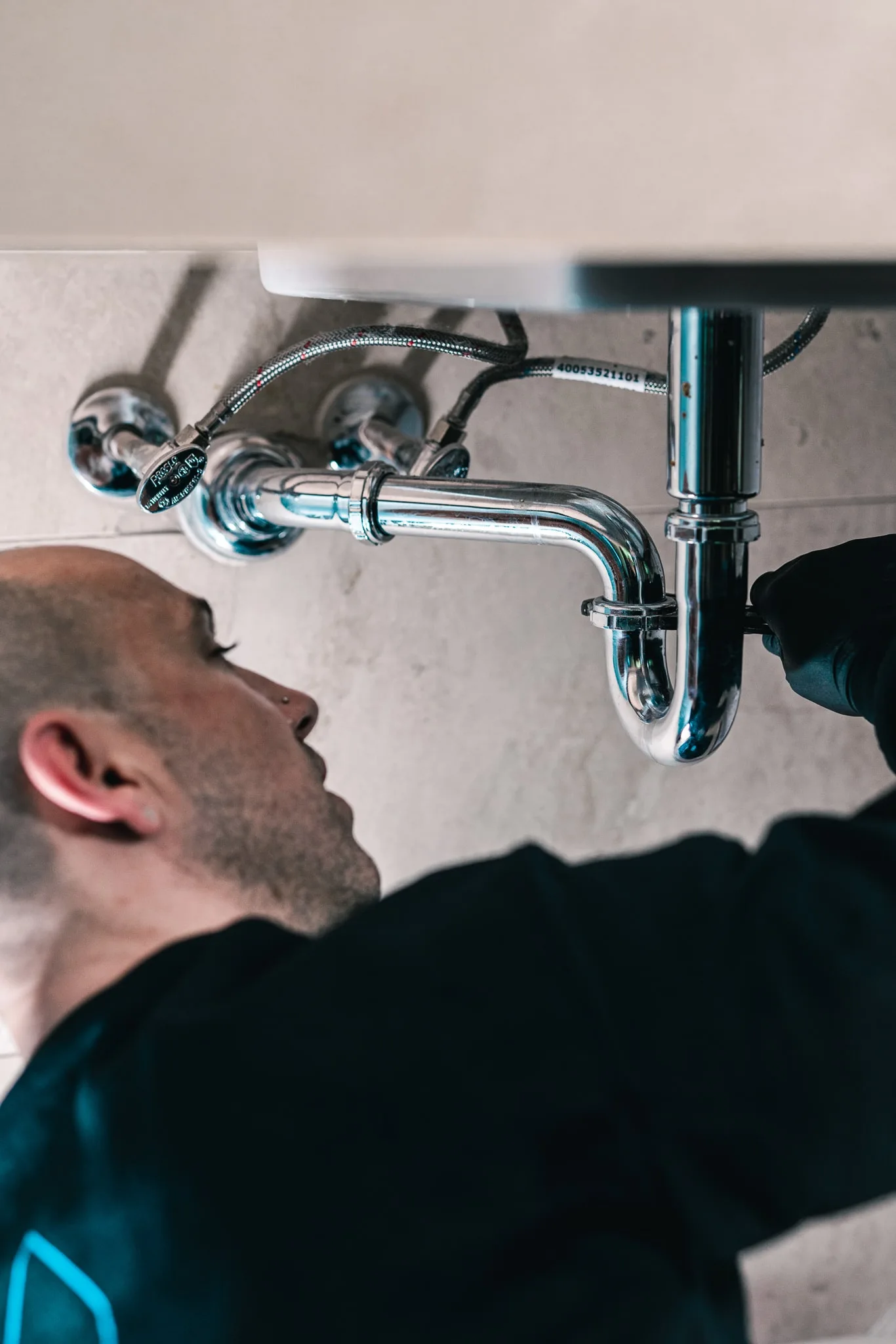
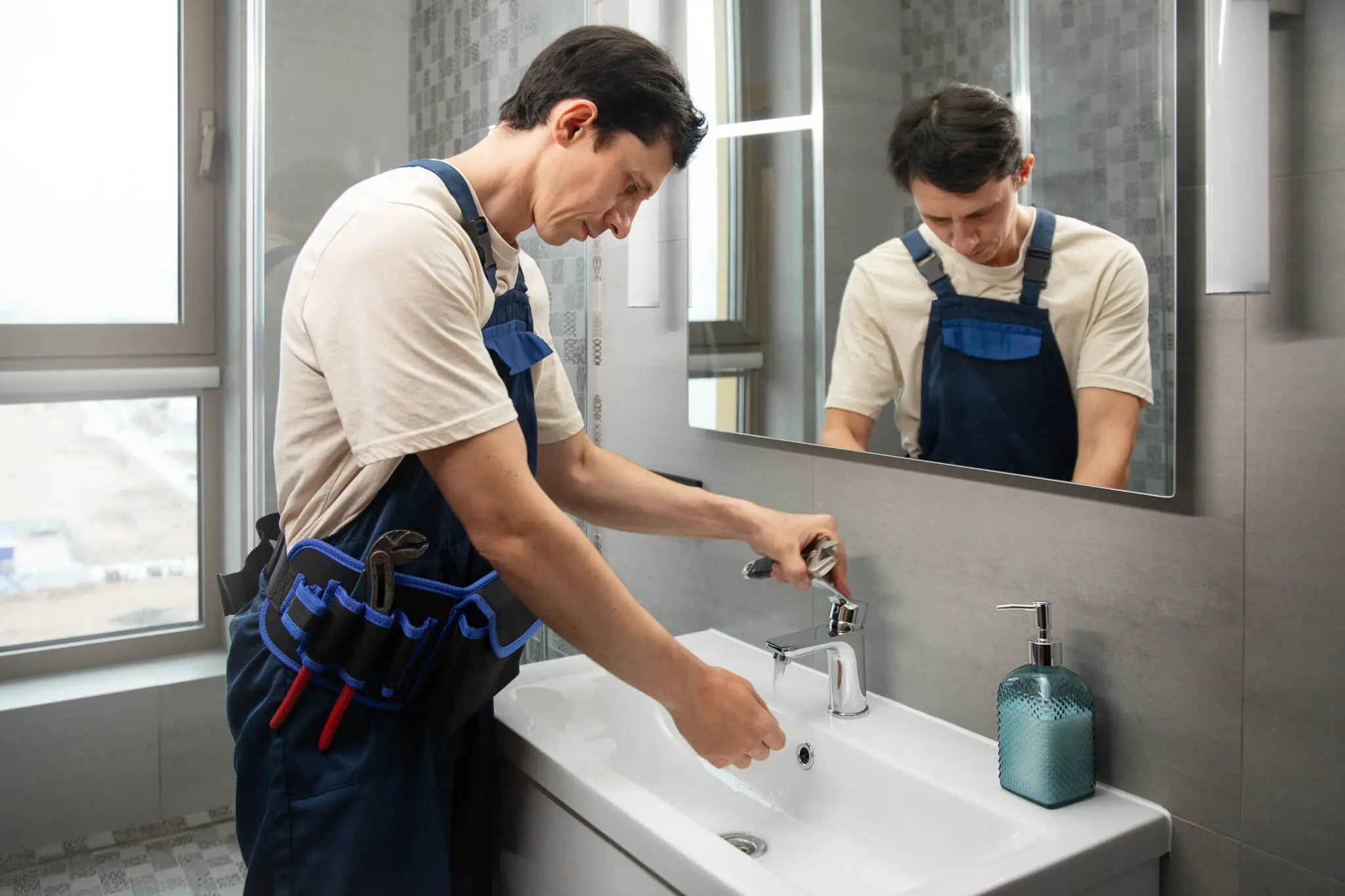
Not all bottom leaks carry the same level of urgency. A water heater leaking from the bottom can mean something as simple as a worn drain valve washer or as serious as a corroded tank lining that is hours away from a full rupture. The severity depends entirely on the source, which is why identifying it accurately matters before you call anyone. Our water heater services team in the GTA handles both routine repairs and urgent replacements, and the call goes very differently depending on what you have already identified.
The four possible sources of a bottom leak are the drain valve, condensation on the tank exterior, the T&P relief valve discharge tube, and the tank body itself. This guide walks through each one so you can diagnose the situation accurately before reaching out to a licensed plumber.
The drain valve is a threaded fitting located near the base of the tank. It is used to flush the tank during annual maintenance or to drain it fully before replacement. Over time, the internal seat or washer inside the valve wears down, and a slow drip or seep can develop from the valve body, its packing nut, or the threads where it connects to the tank.
Condensation is not a water heater leaking from the bottom in the true sense. It is moisture from the surrounding air precipitating on the cold surface of the tank, typically when the incoming cold water supply is significantly cooler than the ambient room temperature. This happens most often during Ontario winters or when a newly installed tank is first filled.
The temperature and pressure (T&P) relief valve is a safety device mounted near the top of the tank. Its discharge tube runs vertically down the side of the unit and terminates near the floor. If the T&P valve opens and releases water, that water pools at the base of the tank and can be mistaken for a bottom leak caused by the tank itself.
This is the scenario that warrants the fastest response when you notice a water heater leaking from the bottom. If moisture is originating from the steel body of the tank itself, the interior lining has corroded through. The tank cannot be patched or repaired. Once the lining corrodes to the point of seeping, a full tank rupture is a matter of time.
Before you determine the exact source, take these steps to protect your home from further water damage:
A water heater leaking from the bottom of the tank body is beyond repair. Any investment at this point goes into a system with an imminent failure ahead of it. If the heater is already over 8 years old, the tank body leak likely developed in a system that was already approaching the end of its service life. According to Natural Resources Canada, water heating accounts for roughly 17% of total energy use in the average Canadian home, making replacement unit selection an important efficiency decision as well as a practical one.
Use the replacement as an opportunity to evaluate whether a tankless unit is the right fit for your household. Tankless systems eliminate tank body corrosion as a failure mode entirely. Our water heater replacement team can provide transparent quotes for both tank and tankless options across the GTA, including Toronto, Mississauga, Scarborough, Oakville, and Etobicoke.
A water heater leaking from the bottom is not a situation to monitor and revisit next week. Whether the source is a drain valve, a T&P discharge, or a corroding tank body, each cause requires a specific and timely response. Galaxy Plumbing responds to water heater leak calls across the Greater Toronto Area with same-day availability in most cases.
Our licensed team identifies the source of the bottom leak, confirms whether repair or replacement is the correct response, and carries out the work with full transparency. If you have noticed a water heater leaking from the bottom of your tank and are unsure of the source, do not wait. Contact our team today for a same-day assessment.
It depends on the source. A slow drip from the drain valve is less immediately dangerous but still needs to be addressed within a day or two. Any moisture originating from the tank body itself is not safe to leave unaddressed. The timeline to a full tank rupture is unpredictable. Shut off the cold water supply and call a licensed plumber the same day.
A standard 40-gallon tank holds approximately 150 litres of water. If the rupture occurs while the cold water supply remains open, that volume plus continuous incoming flow is released until the supply is shut off. The combination of the initial tank volume and the ongoing incoming water can produce serious basement flooding within minutes.
A 5-year-old tank leaking from the body is uncommon and may indicate a manufacturing defect, accelerated corrosion from water chemistry, or a previous physical damage event. Check whether the unit is still under the manufacturer's warranty. Most quality tank heaters carry a 6 to 10-year warranty on the tank lining. Contact the manufacturer and your installing plumber before purchasing a replacement.
Yes. A T&P valve that discharges repeatedly is responding to excess pressure or temperature cycling inside the tank. This repeated stress can accelerate tank lining failure and may also indicate a thermostat that is not regulating temperature correctly. A licensed plumber should assess both the valve and the thermostat when this symptom is present. Our water leak detection service can identify whether water is coming from the valve or from the tank itself.
Water damage from a sudden and accidental water heater failure is typically covered under a standard home insurance policy. Gradual leaks that were visible and not reported or addressed are usually excluded as a maintenance failure. The Insurance Bureau of Canada provides guidance on what sudden and accidental water damage coverage typically includes. For a full breakdown of what is and is not covered, see the IBC home coverage types page. Document the leak and timeline accurately when reporting to your insurer.
Galaxy Plumbing responds to water heater leak calls across Toronto, Mississauga, Scarborough, Oakville, and Etobicoke with same-day availability in most cases. Our licensed team will identify the source of the leak, confirm whether repair or replacement is appropriate, and complete the work with transparency and care. Contact us now to get started.