The kitchen drain receives more challenging material than any other drain in the house. Grease, cooking oil, food particles, soap film, detergent residue, and dishwasher discharge all pass through a single 1.5-inch or 2-inch drain line. Over time, grease coats the inner wall of the pipe. Food particles adhere to the grease layer. Soap film binds it together. The result is a kitchen drain clogged by a progressively thickening layer of accumulated material that eventually reduces flow to a trickle or stops it entirely.
The location of the blockage determines the appropriate response. A clog at the trap directly below the sink can often be addressed without professional tools. A clog in the drain line between the trap and the main stack, or in the main line itself, requires professional clearing. Knowing the difference prevents you from applying the wrong approach and making the situation worse.
A slow kitchen drain that still moves water, just slowly, is usually an accumulation problem: grease and debris narrowing the line rather than blocking it completely. A kitchen drain that has stopped entirely, with water pooling in the sink regardless of how long it sits, indicates a complete obstruction somewhere in the line.
If only the kitchen sink is slow or blocked and all other fixtures drain normally, the clog is in the kitchen drain line itself. If the kitchen drain, the dishwasher connection, the washing machine drain, or the basement floor drain are all slow or backing up simultaneously, the obstruction is further down the line in the shared drain stack or main sewer lateral. A kitchen drain clogged situation that involves multiple fixtures requires a different approach from a single fixture problem.
Multiple slow drains at the same time are one of the clearest indicators of a main sewer line issue. Galaxy Plumbing's emergency repair team handles main line clearing across the GTA when the scope goes beyond a single fixture.
For early-stage grease buildup in a kitchen drain clogged situation, pouring a full kettle of boiling water slowly down the drain can soften and partially dissolve fresh grease deposits. This works best as a regular maintenance habit to prevent accumulation rather than as a solution to a developed blockage. It is not appropriate for PVC pipes if the water is at a full rolling boil. Let the kettle sit for 30 seconds off the boil before pouring if you have PVC drain lines.
A cup plunger, the standard domed rubber plunger, can dislodge a localized obstruction in the kitchen drain by creating pressure fluctuations in the line. Cover the overflow opening if there is one, fill the sink with several inches of water to improve the seal, and plunge firmly 10 to 15 times with consistent pressure. If water drains after plunging, run hot water for a minute to confirm the line is clear. If the drain backs up again within hours, the plunger has opened a path through the blockage without removing it.
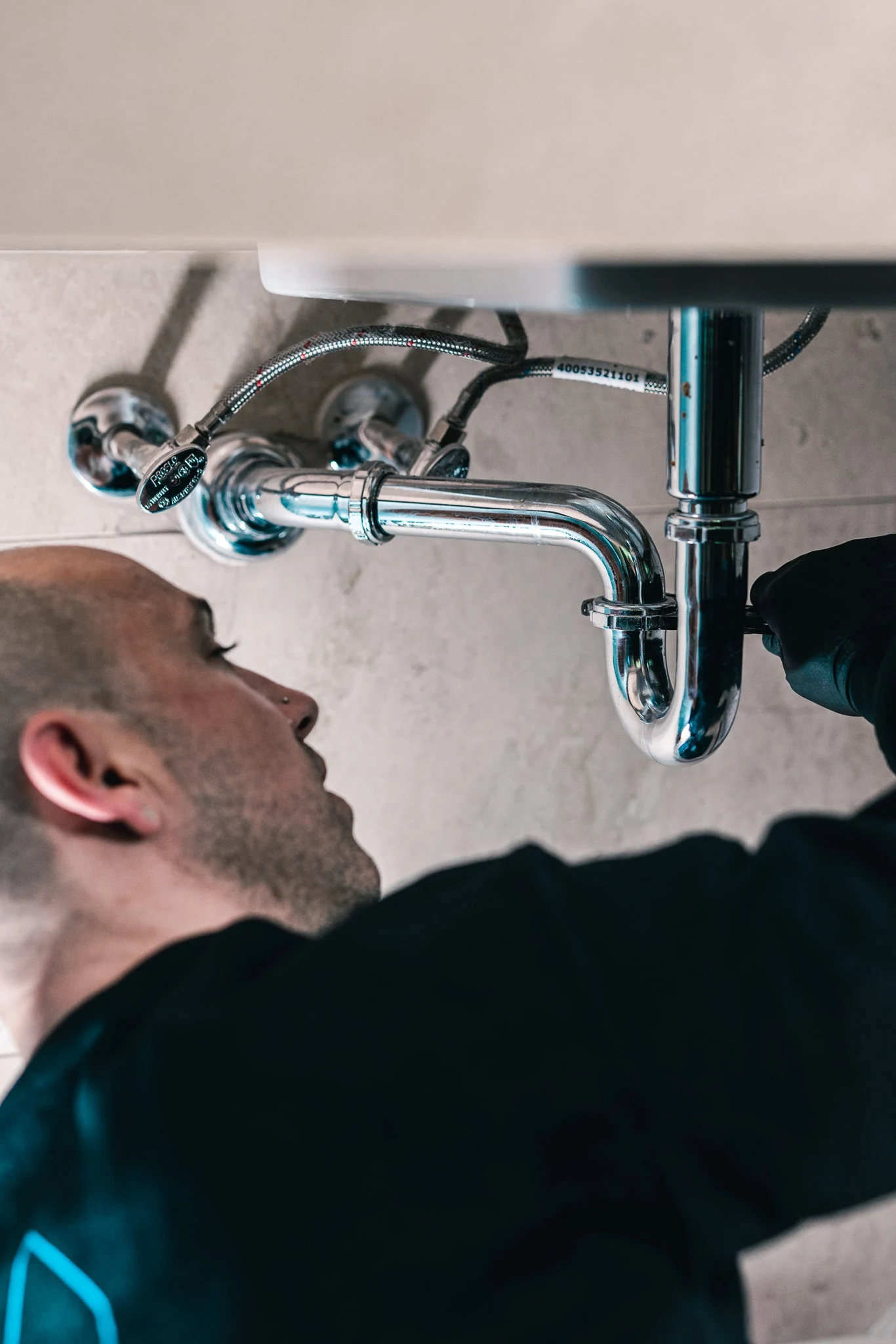
The P-trap under the kitchen sink is the curved section of pipe that holds water to block sewer gases. It is also where food particles and grease concentrate first. Placing a bucket under the trap, unscrewing the slip nuts on both ends, and removing the trap section allows you to inspect and manually clear any accumulation. This is the most effective homeowner-appropriate intervention for a kitchen drain clogged at the fixture level. Clean the trap, check the drain arm leading into the wall, and reinstall. Run water to test.
If the trap is clear and the kitchen drain is still blocked, the obstruction is in the drain line within the wall, below the floor, or in the stack. At that point, a plumber with a drain snake or hydro jetting equipment is the correct next step.
Store-bought chemical drain cleaners are among the things to avoid with a kitchen drain clogged by grease. They are corrosive to older pipe materials, particularly cast iron and PVC, degrade rubber seals, and rarely resolve grease-based kitchen drain blockages because grease is hydrophobic and chemical cleaners are water-based. They are also hazardous if mixed with other household chemicals and create unsafe conditions for any plumber who subsequently opens the line.
Avoid using a garden hose or forcing excessive water volume into a blocked kitchen drain. This can push the blockage further down the line and potentially cause a backup at a lower point such as the basement floor drain.
A kitchen drain clogged slowly over weeks indicates accumulation rather than a discrete obstruction. Snaking creates a channel through the buildup but leaves the grease coating on the pipe wall. Hydro jetting removes the coating itself, restoring the full bore of the line and significantly delaying the next blockage. A plumber assessing the situation can recommend the appropriate method based on the history and symptoms.
If the kitchen drain was cleared recently and has slowed again, the clearing addressed a surface obstruction without resolving the underlying accumulation. This is the most reliable indicator that hydro jetting rather than snaking is the appropriate treatment. Our Toronto plumbing team and Mississauga plumbers use hydro jetting for recurring kitchen drain situations and consistently find that the single thorough treatment resolves what multiple snake visits have not.
A kitchen drain clogged downstream of a garbage disposal involves ground food particles mixed with grease. The disposal itself can be cleared if the unit has jammed, but the drain line downstream benefits from hydro jetting rather than snaking because the combination of fine food particles and grease coating does not respond well to mechanical clearing alone.
As noted above, if the kitchen drain blockage is accompanied by slow drains elsewhere in the home, the problem is not confined to the kitchen line. A licensed plumber with camera inspection capability is the appropriate first response to identify the location and nature of a main line obstruction before any clearing is performed.
A licensed plumber responding to a kitchen drain clogged call begins with an assessment of the symptoms and history. If the blockage is clearly at the fixture level, snaking from the cleanout or through the drain opening clears the obstruction quickly. The plumber tests the flow and recommends whether hydro jetting is warranted given the history.
For a kitchen drain that has recurring blockages or a known history of grease accumulation, the plumber may recommend a camera inspection of the line before hydro jetting to confirm the pipe wall condition and identify any sections that require attention beyond clearing. This is particularly relevant for older homes where the kitchen drain line material may be cast iron rather than PVC.
Clients in Scarborough and Oakville can reach our Scarborough plumbing team and Oakville plumbers for kitchen drain clearing and assessment. Our Etobicoke plumbing team covers that area as well for homeowners dealing with stubborn or recurring kitchen drain problems.
Once a kitchen drain clogged situation has been properly cleared, the following habits significantly reduce the likelihood of recurrence.
For commercial kitchens where grease volume is high and drain maintenance is a compliance concern, Galaxy Plumbing's commercial property management services include scheduled hydro jetting programs that maintain kitchen drain lines between municipal inspection cycles.
The City of Toronto's fats oils and grease program and municipal guidance on residential drain habits provides additional context on how what goes down kitchen drains affects both household plumbing and the broader municipal sewer system. More detailed Canadian guidance on kitchen waste disposal is also available through Environment and Climate Change Canada.
A kitchen drain clogged repeatedly is almost always the result of consistent habits rather than bad luck or unavoidable circumstances. The grease, the food scraps, and the daily accumulation are manageable with the right approach to what enters the drain and the right maintenance interval to keep the line clear.
When clearing is needed, Galaxy Plumbing provides professional kitchen drain snaking and hydro jetting across the Greater Toronto Area. Our licensed plumbers assess each situation individually, recommend the method that addresses the actual cause rather than the surface symptom, and explain the findings clearly so you understand what the drain needs and why. Contact our team to request a quote or schedule a visit. You can also explore the full range of residential plumbing services we provide across the GTA.
The baking soda and vinegar combination produces a brief fizzing reaction but has no meaningful clearing effect on grease-based kitchen drain blockages. The reaction is largely neutralised by the time it reaches the blockage and does not dissolve or dislodge accumulated grease or food debris. It is a safe experiment but not a reliable solution.
For a household that practices good drain habits, a professional cleaning every two to three years is a reasonable preventive interval. For households with a history of grease disposal through the drain, or where previous blockages have occurred, annual professional cleaning is a more appropriate maintenance frequency.
Snaking creates a channel through the obstruction and is the appropriate first response for an acute blockage. Hydro jetting scours the pipe wall and removes the grease coating itself, addressing the accumulated material that caused the blockage rather than just the blockage itself. For recurring kitchen drain clogs, hydro jetting is the more effective long-term solution.
The garbage disposal handles the grinding function at the fixture. The drain line downstream of the disposal handles the flow of the ground material to the stack. A functioning disposal paired with a slow drain indicates that the blockage is in the drain line downstream of the disposal outlet, not in the disposal itself. Snaking or hydro jetting the drain line is the correct response.
A mild occasional drain odour can come from the P-trap if it has dried out or from residue on the drain strainer. A persistent or strong drain smell, particularly of sulphur or sewage, suggests an issue deeper in the line: grease accumulation producing off-gas, a missing or dried trap further down the line, or a partial main sewer line obstruction. If the smell is persistent, a drain inspection is warranted.
Galaxy Plumbing provides professional kitchen drain clearing, hydro jetting, and inspection services across the Greater Toronto Area. Our licensed plumbers assess the cause, apply the right clearing method, and explain what the drain needs to stay clear. Contact our team for a free quote or same-day assessment.