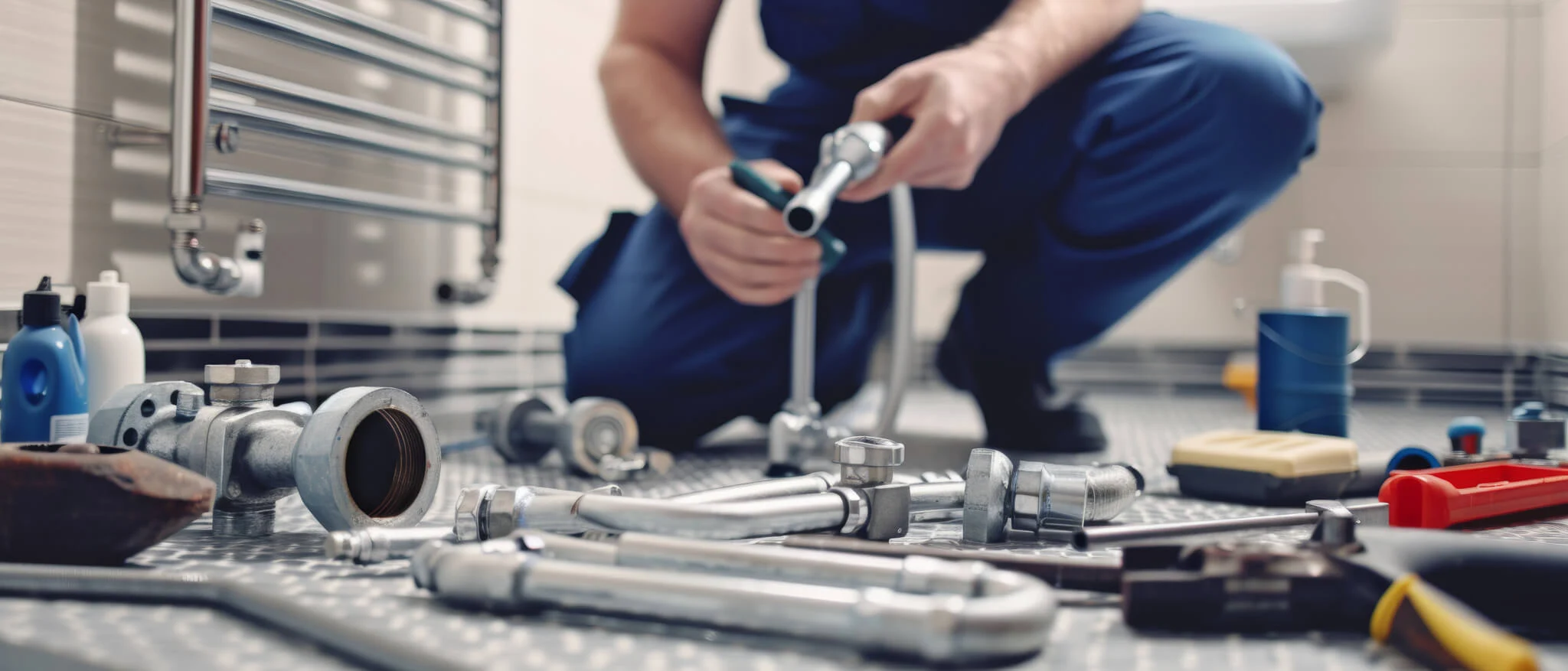
A hot water on demand system, or tankless water heater, has no storage tank. When a hot water tap opens anywhere in the home, cold water flows into the unit and passes through a heat exchanger that brings it to the set temperature almost instantly. The moment the tap closes, the unit shuts down completely.
This stands in direct contrast to a conventional tank heater, which maintains 40 to 60 gallons of preheated water around the clock regardless of whether anyone is using it. That constant heating cycle, even during the night or while the family is away, consumes energy continuously. Understanding this distinction is the foundation of every benefit that follows.
Our water heater and tankless installation team (/water-heater-tankless-installation) installs and services both system types across the GTA. The guidance below is based on what Ontario families with these systems actually experience, not what the marketing materials claim.
The most immediately appreciated benefit for families is the elimination of the hot water recovery wait. With a tank heater, a long shower or a bath that drains the stored supply means waiting 30 to 40 minutes for the tank to reheat. During a busy morning with multiple family members showering, this is a real daily friction point.
A properly sized tankless unit heats water continuously as long as demand exists. There is no stored supply to deplete, which means the last person to shower gets the same temperature water as the first. For households with three or more people or high morning demand, this is typically the most valued practical improvement.
Proper sizing matters here. A tankless unit has a maximum flow rate, measured in litres per minute, at a specific temperature rise. A unit that is undersized for the home's peak demand can produce temperature drops when multiple fixtures run simultaneously. This is why working with a licensed plumber to size the unit correctly for your household's actual peak demand is essential, not optional.
According to Natural Resources Canada, water heating accounts for roughly 17% of total energy use in the average Canadian home. A significant portion of that consumption in a tank-based system comes from standby heat loss: the energy the tank uses to maintain water temperature when no one is actively drawing hot water.
High-efficiency condensing tankless units operate at 94% to 98% AFUE, compared to 67% to 80% for a standard tank heater. That efficiency gap translates to a measurable reduction in monthly natural gas or electricity consumption for households with consistent hot water use. The exact savings depend on household size, usage patterns, and current energy rates, but families of four or more typically see the most meaningful reduction.
For a detailed comparison of operating costs and payback periods, our guide on tankless vs tank water heaters (/blog/tankless-vs-tank-water-heater) walks through the calculation with realistic Ontario numbers.
A conventional tank water heater in Ontario has a typical service life of 8 to 12 years. A tankless water heater, with proper annual maintenance, is rated for 20 years or more. That lifespan difference is substantial: over a 20-year period, a homeowner with a tank system is likely replacing the unit at least once, possibly twice, while a homeowner with a properly maintained tankless system is still on their original installation.
When comparing the true cost of each system over time, the longer tankless lifespan meaningfully changes the total cost of ownership calculation. The higher upfront installation cost, spread across 20 years, often produces a lower annual cost than multiple tank replacements across the same period.
A tankless water heater mounts on the wall and has a footprint roughly equivalent to a small suitcase. A 40- to 60-gallon tank heater requires dedicated floor space in the mechanical room and cannot be installed in locations where a tank would not physically fit.
In GTA homes where mechanical room space is at a premium, or in condominiums and smaller homes where every square foot matters, eliminating the tank frees up usable space. Some homeowners use the freed mechanical room area for additional storage. Others find it enables a more organized utility space overall.
A conventional tank heater carries an inherent risk that a tankless system does not: tank body corrosion leading to a sudden and uncontrolled water release. A 40-gallon tank holds approximately 150 litres of water, and if the cold water supply remains open when the tank fails, continuous incoming flow compounds that volume until someone shuts off the supply. Serious basement flooding can develop within minutes.
Tankless systems have no tank to corrode and no stored volume to release. The failure modes for tankless units are component-level, typically heat exchanger scale buildup or ignition failures, and these failures affect performance rather than producing catastrophic water release. For homeowners concerned about basement flooding risk, this is a meaningful structural advantage.
Our flood prevention team (/flood-prevention-backwater-valve) can advise on comprehensive basement protection strategies that complement a tankless installation.
The efficiency improvement from a condensing tankless system versus a standard tank heater produces a direct reduction in natural gas consumption per unit of hot water delivered. Over the course of a year, this reduction is meaningful both in terms of household operating costs and in terms of greenhouse gas emissions from the home's energy use.
Several ENERGY STAR certified tankless models also qualify for rebates through the Canada Greener Homes program, recognizing their environmental performance relative to conventional tank systems. Eligibility changes regularly, and a licensed plumber can confirm which models currently qualify at the time of installation.
Hot water on demand systems are not universally the better choice for every GTA home. Homes with aging or undersized gas supply lines may require a gas line upgrade to accommodate a tankless unit's higher BTU input demand, adding to the installation cost. Homes with very low hot water demand, a single occupant or a couple with minimal simultaneous fixture use, may not generate enough monthly savings to justify the higher upfront cost within a reasonable payback window.
Homes where the priority is the lowest possible upfront cost, such as a rental property being maintained for resale, may find a tank replacement more practical given the cost differential. And homes where multiple high-flow fixtures run simultaneously at extreme rates may benefit from a high-capacity tankless unit or supplementary point-of-use units in remote locations.
If you are assessing replacement cost for either system type, our guide on water heater replacement cost in Ontario (/blog/water-heater-replacement-cost-ontario) provides current installed price ranges for both options.
For most Ontario families with three or more people, consistent daily hot water demand, and a home that will be owner-occupied for 10 or more years, the benefits of a tankless system are concrete and cumulative. Endless hot water, lower energy costs, longer service life, and the elimination of tank failure risk are all real advantages that compound over time.
Galaxy Plumbing's licensed team provides honest, home-specific recommendations across Toronto, Mississauga, Scarborough, Oakville, and Etobicoke. We assess your gas infrastructure, household demand profile, and available space before recommending a system, not after. Contact our team (/contact) to book a consultation and get transparent quotes for both tank and tankless options.
A tankless unit begins heating water the moment the tap opens and reaches the set temperature within a few seconds at the unit's location. However, in larger homes where the unit is physically distant from the fixture being used, there is still a brief delay while the hot water travels through the pipe between the unit and the tap. This pipe distance delay is the same as with a tank system and is unrelated to the tankless unit's heating speed.
Yes, within the unit's rated flow capacity. A residential gas tankless unit with a flow rate of 10 to 12 litres per minute can typically supply two showers and a dishwasher simultaneously at a comfortable temperature. Very high demand scenarios, such as filling a large soaker tub while two showers run simultaneously, may require a high-capacity unit or a second unit in a point-of-use configuration.
Annual descaling of the heat exchanger is the primary maintenance requirement. In the GTA, where municipal water contains moderate to high mineral content, scale accumulates on the heat exchanger surface over time, reducing efficiency and eventually restricting flow. Annual descaling by a licensed technician prevents this accumulation. Many manufacturers require documented annual maintenance to honour the unit's warranty.
Yes. ENERGY STAR certified condensing tankless models may qualify for rebates through the Canada Greener Homes program or through Enbridge Gas efficiency incentive programs. Rebate amounts and eligible models change regularly. A licensed plumber can confirm current eligibility for the specific unit being installed and can advise on the application process.
Tankless units function normally in Ontario winters. The incoming cold water temperature drops significantly in winter, which means the unit must heat the water through a larger temperature rise to reach the set output temperature. This reduces the flow rate achievable at the target temperature compared to summer operation. Proper sizing using winter inlet water temperatures prevents undersizing for the season when demand is typically highest.