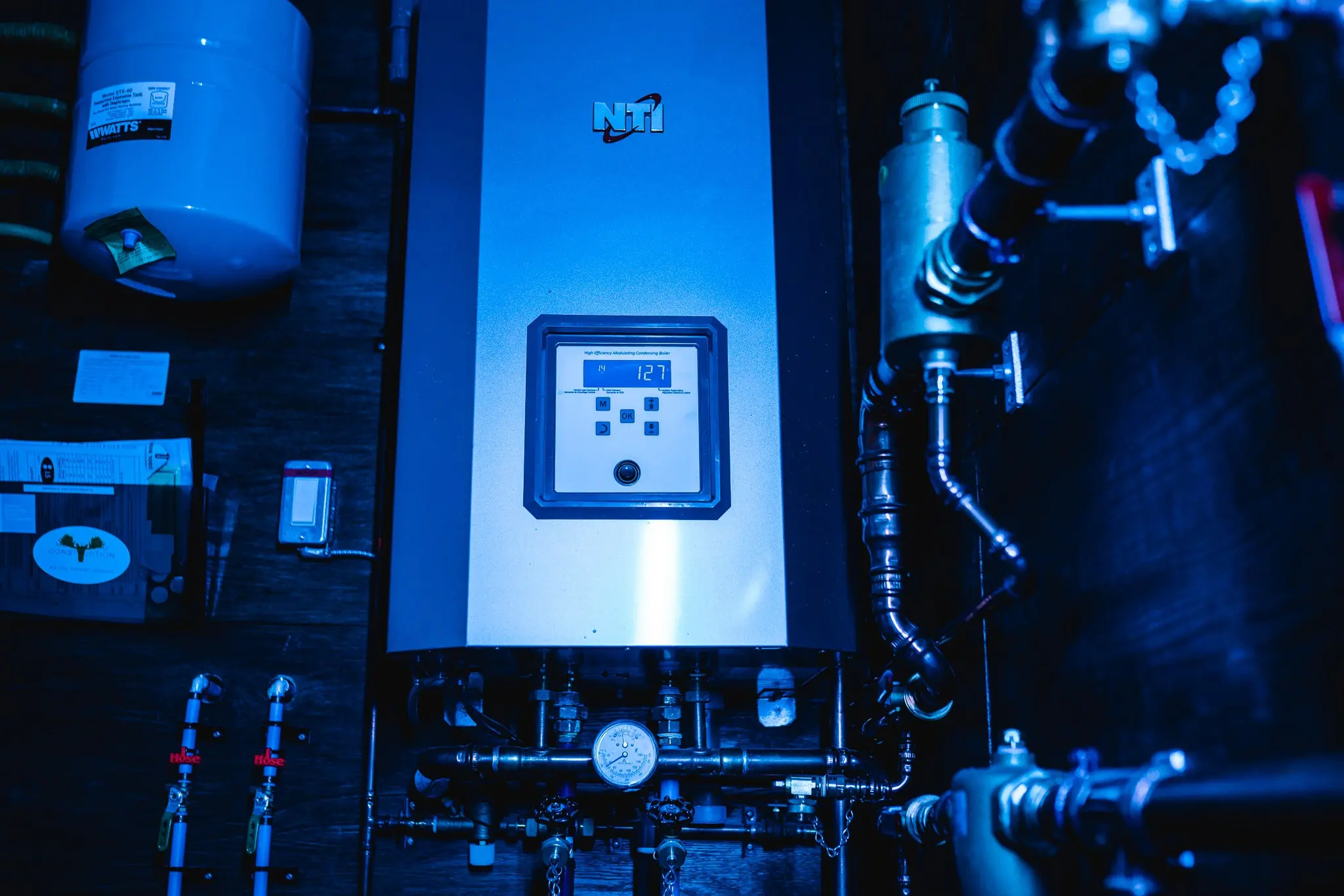
Losing heat in an Ontario winter is stressful, and it is easy to assume the worst immediately. The reality is that a significant portion of no-heat emergency calls are resolved quickly once a few basic checks are completed. Work through the steps below in order before calling for service. If you reach the end of the list without restoring heat, the situation warrants a technician and Galaxy Plumbing's emergency repairs team is available.
Verify that the thermostat is set to HEAT and that the setpoint temperature is several degrees above the current room temperature. Confirm the batteries are not dead if your thermostat is battery-powered. A thermostat with dead batteries will display nothing or show erratic readings. Replace with fresh batteries and wait two minutes to see whether the furnace responds.
Many furnaces have a power switch mounted on the unit or on the wall near the mechanical room that resembles a standard light switch. This switch is sometimes turned off accidentally. Confirm it is in the ON position.
Go to your electrical panel and look for a tripped breaker. A tripped breaker sits between the ON and OFF positions rather than fully in either. Reset it by switching it firmly to OFF and then back to ON. If the breaker trips again immediately after reset, do not attempt further resets. A breaker that trips repeatedly indicates an electrical fault that needs professional attention.
A severely clogged filter causes the furnace to overheat and shut down on the high-limit safety switch. Replace the filter with a fresh one and wait ten minutes for the furnace to cool before attempting a restart. This is one of the most common causes of sudden heat loss in GTA homes, particularly at the start of winter when a filter has been in place since the previous heating season.
Confirm that the gas shutoff valve on the supply line to the furnace is fully open. The handle should be parallel to the pipe, not perpendicular. If other gas appliances in the home are also not functioning, the issue may be with the supply to the property. Contact your gas utility directly in that case.
Locate the reset button on the furnace, typically a small red or yellow button on the burner housing. Press it once firmly and wait for the ignition sequence to complete. If the furnace starts and heats normally, monitor it for the next hour to confirm stability. If it shuts down again, do not press reset a second time before calling for service. Multiple resets on a failing system can introduce additional problems.
Most modern furnaces have a control board that flashes an error code sequence when a fault is detected. The code is displayed as a series of flashes from an LED light on the control board, visible through a small viewing window on the furnace access panel. Count the flashes and cross-reference with the code key printed inside the access panel or in your furnace manual. Note the code before you call for service, as it helps the technician arrive prepared.
If you smell gas near the furnace or anywhere in the home, do not attempt any of the steps above. Do not operate any electrical switches, light switches, or appliances. Do not use your phone while inside the home. Leave immediately, leaving the door open behind you, and call 911 from outside. Contact your gas utility from a safe distance. Do not re-enter the home until emergency services confirm it is safe.
After a gas event, contact Galaxy Plumbing to inspect the system before the furnace is restarted. Our HVAC team will confirm the system is safe and identify the source of the issue before recommending next steps.
A rapid and sustained temperature drop inside the home is a risk for frozen pipes. Galaxy Plumbing handles both plumbing and HVAC emergencies, so if you experience a water line issue alongside a furnace failure, our team can respond to both.
Galaxy Plumbing provides emergency repairs for furnace failures across Mississauga, Toronto, Oakville, Vaughan, and Richmond Hill. Our technicians arrive with common parts stocked on the service vehicle to resolve most furnace failures in a single visit.
Most furnace emergencies in Ontario homes are preventable with routine maintenance. Annual furnace service performed before the heating season begins identifies worn components, verifies gas pressure and combustion performance, and catches problems before they cause a mid-winter failure. Filter changes on a consistent schedule prevent the most common cause of sudden heat loss.
If your furnace has required multiple service calls in a single season or is more than 15 years old, a conversation about replacement may be worth having before the next failure event. Our HVAC team can provide an honest assessment of whether repair or replacement makes the better financial case for your situation.
Start with the thermostat. Confirm it is set to HEAT with a setpoint above the current room temperature and that the batteries are live. Then check the power switch on the furnace, the circuit breaker, and the air filter. These four checks resolve a large share of no-heat calls without a technician being required.
Locate the reset button on the burner housing, typically a small red or yellow button. Press it once and wait for the ignition sequence to complete before assessing whether heat is being produced. If the furnace shuts down again after a single reset attempt, call for service. Pressing reset multiple times on a faulted system is not advisable.
Short-cycling is most often caused by an overheating event triggering the high-limit switch. A clogged filter is the most common root cause. It can also be caused by a faulty flame sensor, a cracked heat exchanger, or an oversized unit that heats the space too quickly. A technician can determine which cause applies after a diagnostic visit.
Yes. If a furnace failure is not addressed and outdoor temperatures drop well below zero, the interior of the home can cool to the point where water pipes on exterior walls are at risk of freezing. Opening cabinet doors, letting faucets drip slightly, and using portable electric heaters in the coldest areas of the home can reduce that risk while waiting for repairs.
Galaxy Plumbing prioritizes urgent no-heat calls, particularly during cold weather. Response time depends on current call volume and your location within the GTA service area. Contact our team directly for current availability. Our technicians stock common furnace parts and are equipped to complete most repairs in a single visit.
When your furnace stops working and the checklist has not resolved it, Galaxy Plumbing is the team to call. We serve Mississauga, Toronto, Oakville, Vaughan, and Richmond Hill with TSSA certified technicians and upfront pricing. Contact us now or visit our emergency repairs for urgent service.