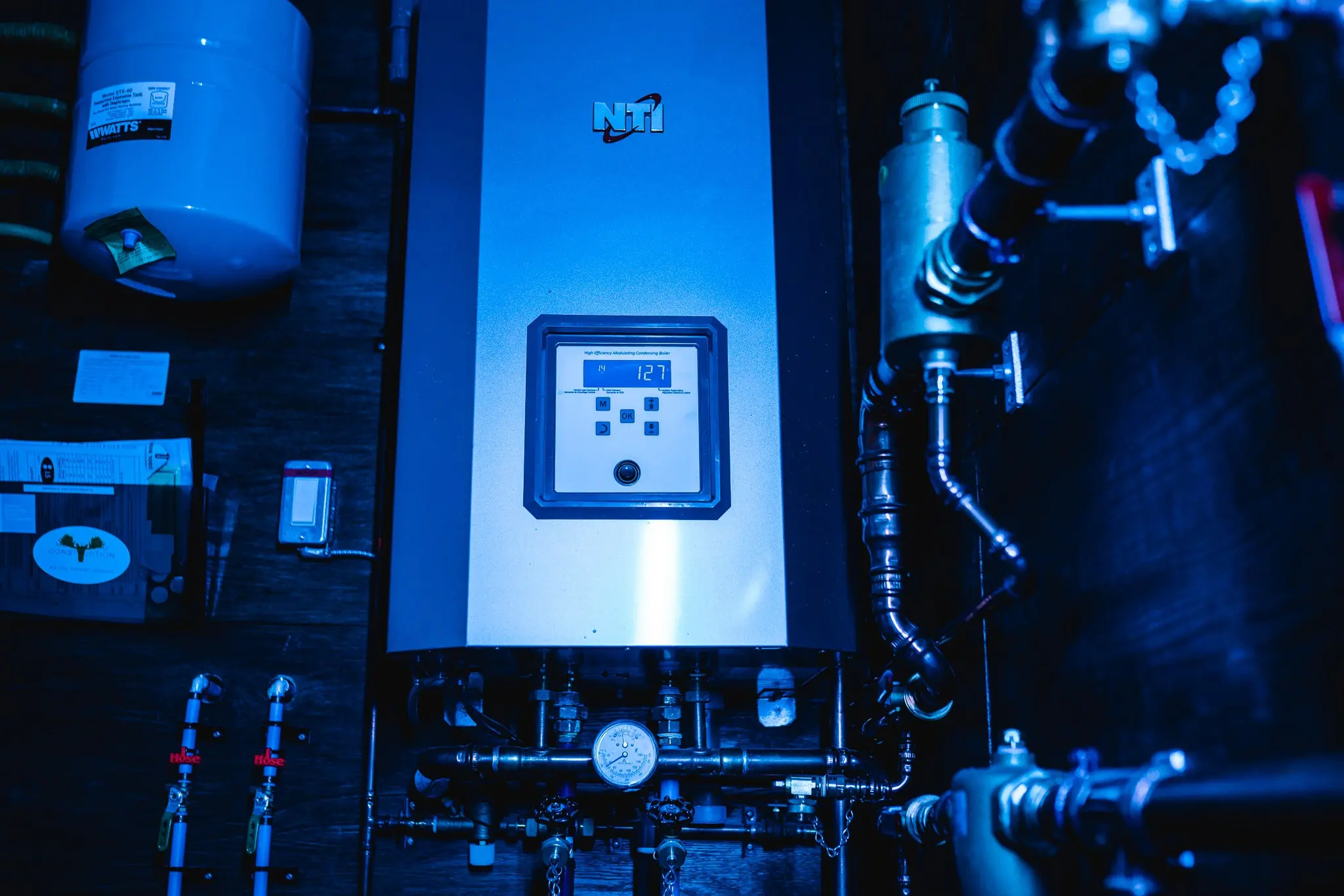
Before assuming a significant mechanical problem, run through these quick checks. A large proportion of cold-air calls are resolved by one of them.
If the thermostat fan setting is on "ON" rather than "AUTO," the blower runs continuously, including during periods when the furnace is not actively producing heat. This circulates room-temperature or cool air through the vents even when the furnace is working correctly. Switch the fan setting to "AUTO" so the blower only runs when the burner is actively heating the air.
If the thermostat setpoint is below the current room temperature, the furnace will not call for heat. Verify that the setpoint is several degrees above the current indoor temperature, then wait five minutes to see whether the furnace fires.
A severely restricted filter causes the furnace to overheat. When the internal temperature exceeds the safe operating range, the high-limit safety switch cuts off the burners while the blower continues to run to cool the heat exchanger. The result is the blower pushing unconditioned air through the vents without any heat being produced. Check and replace the filter before anything else.
Most furnaces installed in the last two decades use a hot-surface igniter or an intermittent pilot system rather than a standing pilot flame. If the igniter fails or the ignition sequence does not complete successfully, the gas valve will not open. The blower will still operate because the control board runs its startup sequence, but no combustion occurs and no heat is produced. A flashing error code on the furnace control board often indicates an ignition fault.
Older furnaces with a standing pilot flame will not produce heat if the pilot has gone out. Relighting a standing pilot is typically described in the furnace manual and on a label inside the access panel. If the pilot relights but goes out again within a few minutes, the thermocouple that senses the flame may have failed. This is a straightforward part replacement that a licensed technician can complete quickly.
If the furnace ignition system is functioning but no flame is produced, the gas supply should be investigated. Confirm that the gas shutoff valve on the supply line to the furnace is fully open. If other gas appliances in the home are also not working, contact your gas utility, as the issue may be with the supply line to the property rather than with the furnace itself.
Do not attempt to diagnose or work on gas valves, gas lines, or burner assemblies yourself. These components require a TSSA licensed gas technician. Galaxy Plumbing's emergency repairs team is available for urgent service calls when gas supply or burner issues are suspected.
The high-limit switch is a safety device that shuts off the burners when the heat exchanger reaches an unsafe temperature. When this switch trips, the blower continues running but no heat is produced. The most common causes of overheating are a clogged filter, blocked supply or return vents, or a failing blower motor that is not moving enough air.
Check that all supply and return vents in the home are open and unobstructed. Furniture, rugs, and stored items placed over floor registers are a common source of restricted airflow in GTA homes. If the vents are clear and the filter is clean but the high-limit switch continues to trip, the blower motor or wheel may need to be inspected by a technician.
Leaks in the supply ductwork can pull unconditioned air from attic spaces, crawlspaces, or wall cavities and mix it with the heated air before it reaches the vents. If certain rooms receive consistently cold air while others are warm, duct leakage is a possible contributor. This typically requires a duct pressure test to diagnose accurately.
A cracked heat exchanger is a serious issue. The heat exchanger separates combustion gases from the air that circulates through your home. A crack can allow carbon monoxide to enter the air supply. While a cracked heat exchanger does not directly cause a furnace to blow cold air, it is sometimes discovered during a diagnostic visit prompted by other symptoms and should always be addressed immediately.
If your carbon monoxide detector has sounded, evacuate the home, leave the door open, and call 911 from outside. Do not re-enter until emergency services have confirmed the home is safe. Contact Galaxy Plumbing afterward for a full HVAC inspection before restarting the heating system.
Galaxy Plumbing's emergency repairs service is available when heat loss cannot wait. Our TSSA licensed technicians can diagnose the root cause and advise on the most efficient path to restoring heat.
The most common cause is the thermostat fan being set to ON rather than AUTO, which runs the blower continuously without heat. A clogged filter causing the high-limit switch to trip is the second most frequent cause. After those two, ignition failure or a gas supply issue is likely. Check the thermostat setting and filter first before calling for service.
Many furnaces have a reset button on the burner housing, usually a small red or yellow button. Press it once and wait for the furnace to attempt ignition. If the furnace resets and fires normally, monitor it over the next hour to confirm it holds. If it shuts down again or if no reset button is present, the underlying cause needs to be diagnosed before the system can be safely returned to operation.
Yes. A clogged filter restricts airflow enough to cause the heat exchanger to overheat, which triggers the high-limit safety switch. The switch cuts the burners while leaving the blower running, which circulates cold air through the vents. Replacing the filter resolves this in most cases. If the problem recurs with a clean filter, the blower motor or ductwork may need to be inspected.
Running the furnace while troubleshooting minor causes such as thermostat settings or a filter change is generally safe. However, if you smell gas, see error codes indicating ignition failure, or the high-limit switch is tripping repeatedly, do not continue running the system. These conditions warrant a service call before the furnace is operated further.
Cost depends entirely on the cause. A filter replacement costs a few dollars. A thermocouple replacement runs $150 to $350 including labour. An igniter replacement is typically $200 to $450. More complex repairs involving gas valves, control boards, or blower motors range from $400 to $900. A cracked heat exchanger in an older furnace often makes replacement of the full unit a more practical option financially.
If your furnace is blowing cold air and the simple checks have not resolved it, Galaxy Plumbing can diagnose and repair the problem promptly. Our TSSA licensed technicians serve Mississauga, Toronto, Oakville, Vaughan, and Richmond Hill with upfront pricing on every service call. Book a diagnostic visit or reach our emergency repairs team for urgent situations.