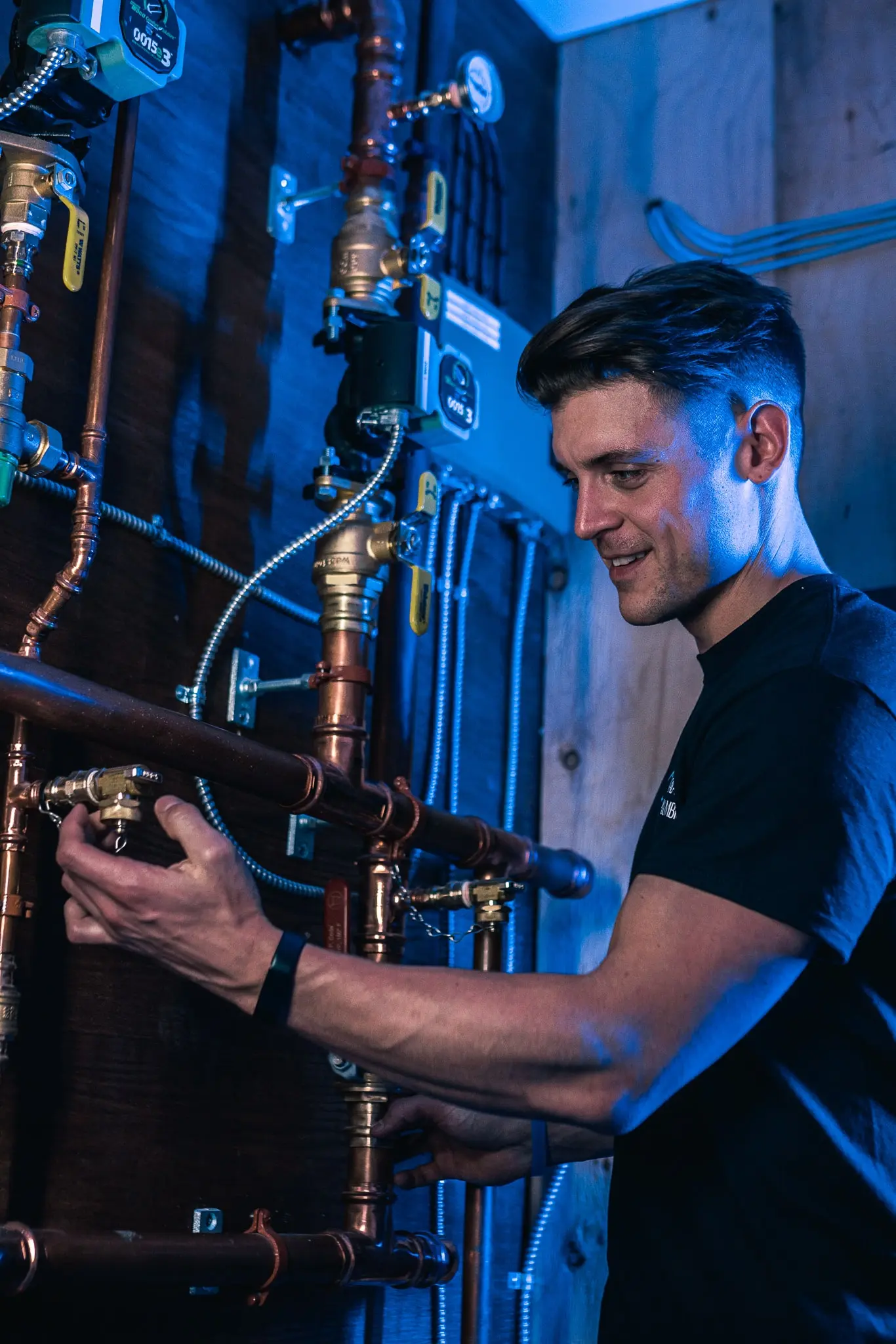
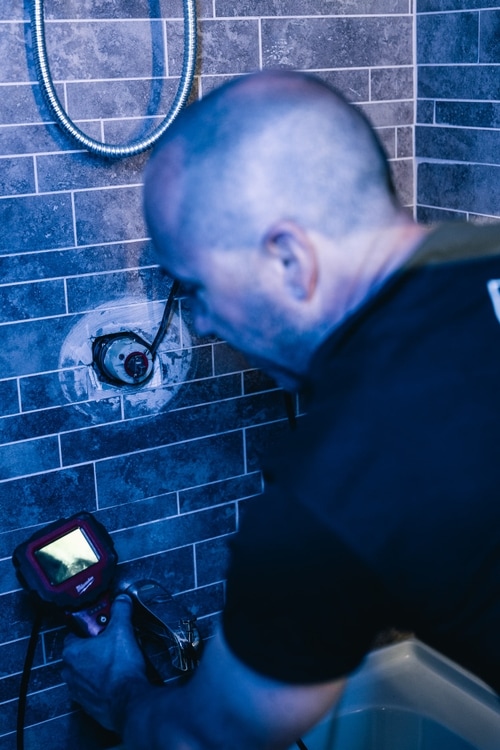
A pipe scope inspection, also called a drain camera inspection or CCTV pipe inspection, involves inserting a waterproof camera mounted on a flexible cable through an access point in a pipe system and advancing it through the pipe to assess interior condition. The term "scope" refers to the scoping of the pipe interior, similar to how medical endoscopy scopes the interior of the body.
In Ontario, pipe scope inspections are performed by licensed plumbers. Under the Trades Qualification and Apprenticeship Act, all work on a building's drain and plumbing systems must be performed by a journeyperson plumber or a registered apprentice working under licensed supervision. This means that an unlicensed individual or general contractor offering "pipe scoping" as a service is not authorized to perform this work on the plumbing system of an Ontario home or building.
Galaxy Plumbing Inc. provides pipe scope inspections across the GTA through licensed plumbing technicians who are trained not only to insert and advance the camera, but to interpret the footage accurately and recommend appropriate corrective action based on what the inspection reveals.
Several types of service providers in Ontario offer pipe scope or camera inspection services, and the differences between them matter when choosing who to hire.
Licensed Plumbing Companies: The most appropriate provider for residential and commercial pipe scope inspections. Licensed plumbers can interpret camera findings, advise on repairs, and perform the corrective work identified during the inspection under a single service relationship. Galaxy Plumbing Inc. operates in this category, serving the GTA with diagnostic-first plumbing care through its drain camera inspection service.
Home Inspection Companies: Some home inspection firms offer drain camera inspection as an add-on service to a standard home inspection. These inspections are useful for pre-purchase assessment but are typically performed by non-plumbers who document findings without being qualified to perform repairs. The footage must then be reviewed by a licensed plumber before any repair decision can be made.
Municipal Infrastructure Contractors: Large contractors who work on municipal sewer infrastructure use pipe scope equipment for large-diameter municipal pipes. These contractors do not typically perform residential pipe scope inspections and are not appropriate providers for homeowner plumbing assessment needs.
General Contractors Offering Drainage Services: Some general contractors in Ontario advertise drainage services including camera inspection. If the contractor is not a licensed plumber, the work may not meet Ontario Building Code requirements and the contractor's liability coverage may not extend to plumbing-specific services.
A professional pipe scope inspection performed by Galaxy Plumbing Inc. covers the interior assessment of the drain and sewer infrastructure accessible from within the building and from exterior cleanout ports.
Before arriving, the Galaxy Plumbing Inc. team confirms the specific concern prompting the inspection, whether it is a pre-purchase assessment, a recurring drain problem, a post-backup verification, or a general condition assessment. This shapes the access strategy and ensures the right equipment is brought to the job.
The licensed plumber identifies the most appropriate access point for the scope based on the pipe layout and the section of concern. The camera is inserted and advanced through the pipe with the technician monitoring live footage on a portable display unit.
The technician notes all findings by location within the pipe run, describing the nature, severity, and approximate pipe depth of each issue observed. For significant findings, the technician explains the observation to the homeowner in plain language during or immediately after the inspection.
Based on the scope findings, the technician provides a repair recommendation. This may include targeted drain snaking and cleaning, scheduled return inspection to monitor a developing issue, or a specific repair scope. No repair work is begun without the homeowner's confirmed understanding and agreement.
Pipe scope inspections in GTA homes consistently reveal a characteristic set of findings that reflect the age and materials of residential plumbing infrastructure across the region. The most frequently documented issues include root intrusion at clay pipe joints in pre-1980 sewer laterals, progressive scale buildup in cast iron drain stacks, joint misalignment caused by frost heave and soil settlement, and partial collapses in clay sewer laterals that have been subject to long-term root pressure or vehicle loads.
These findings are particularly common in established Mississauga, Etobicoke, Scarborough, and Toronto neighbourhoods where original plumbing infrastructure from the 1960s and 1970s remains in service. Our post on roots and clay pipe drain problems provides detailed context on how root intrusion develops and why it requires more than snaking to resolve permanently.
Galaxy Plumbing Inc. provides professional pipe scope inspections for homeowners and property managers across the Greater Toronto Area, performed by licensed plumbers with the training to interpret findings and recommend the right corrective action. Contact us to schedule a pipe scope inspection and get clear, reliable information about the condition of your home's plumbing infrastructure. Our team explains every finding in plain language and gives you honest guidance on what requires attention and what can be monitored.
Yes. Pipe scope inspection, drain camera inspection, and CCTV drain inspection all refer to the same diagnostic process: a waterproof camera is inserted into the pipe system through an access point and advanced while the technician monitors live footage to assess interior condition. Galaxy Plumbing Inc. offers this service under its drain camera inspection offering, serving residential and commercial clients across the GTA.
Yes. Pipe scope inspection is specifically valued because it provides detailed visual information about buried pipe condition without any excavation. The camera accesses the pipe system through existing cleanout ports, floor drains, or fixture access points and travels through the pipe non-destructively. If the inspection reveals a structural issue that requires repair, excavation may be necessary for the repair itself, but the scope allows the repair to be planned precisely rather than requiring exploratory digging. For properties with blocked or inaccessible cleanouts, review our guide on drain replacement signs to better understand when a deeper assessment becomes necessary.
A drain cleaning is appropriate when a blockage is present and there is no history of recurring blockages or structural concerns. A pipe scope inspection is appropriate when the same drain blocks repeatedly within a short period, when a blockage cannot be cleared by snaking, when basement moisture or unexplained wet areas are present, or when purchasing a home with older plumbing. Our post on when to call a plumber outlines the signs that a situation has moved beyond routine drain clearing into diagnostic territory.
Pipe scope inspection equipment can assess the interior of clay, cast iron, PVC, ABS, concrete, and fibreglass pipe systems. The camera equipment used by Galaxy Plumbing Inc. is rated for pipe diameters from 50mm to 300mm, covering the full range of residential and light commercial drain and lateral pipe sizes. For pipes smaller than 50mm, such as fixture traps or vent lines, dedicated micro-camera equipment is required and may be recommended for specific diagnostic situations. To learn more about what causes internal pipe deterioration, read our post on roots and clay pipe drain problems.
A pipe scope inspection itself does not require a permit in Ontario, as it is a diagnostic assessment rather than a repair activity. However, if the inspection reveals the need for drain line repair, replacement, or alteration, a building permit may be required before repair work begins under the Ontario Building Code. Galaxy Plumbing Inc. advises homeowners on permit requirements as part of the post-inspection repair recommendation process. Any repairs carried out by our team follow Ontario Building Code requirements throughout. To understand what the process involves before or after a scope, visit our drain snaking and cleaning overview.