A shower valve is the control mechanism inside the shower wall that regulates water pressure, temperature, and flow. The valve body is the brass or plastic housing installed inside the wall that connects to the hot and cold supply lines. The internal cartridge or mechanism inside that housing does the actual work of mixing the hot and cold water streams to the temperature the user sets and controlling the flow volume when the handle is turned.
Most GTA residential showers use one of three valve types: a pressure-balancing valve, a thermostatic valve, or a manual mixing valve. Each type responds to failure differently and requires a different repair approach. Understanding which type is in your shower helps a licensed plumber bringing cartridge replacement parts to confirm the right cartridge is on the vehicle before arriving.
Pressure-balancing valves are the most common type in GTA residential homes built or renovated after the early 1990s. These valves maintain a constant ratio of hot to cold water pressure even when supply pressure changes, such as when a toilet is flushed elsewhere in the home. This prevents sudden temperature spikes in the shower. The Ontario Building Code requires pressure-balancing protection in residential shower installations. Pressure-balancing valves use a cartridge inside the valve body that is the primary component to fail and the primary repair target.
Thermostatic valves maintain a set water temperature precisely regardless of supply pressure variations. They are more complex than pressure-balancing valves and are typically found in higher-end shower installations with multiple spray functions. Thermostatic valve repair requires more specialized parts and diagnostic skills than standard cartridge replacement.
Manual mixing valves are the oldest type and simply mix hot and cold streams by the position of the handle. They have no pressure or temperature compensation and can produce scalding water if supply pressure changes. Many older GTA homes have manual mixing valves that are candidates for upgrade to pressure-balancing models during any valve replacement job.
Inconsistent temperature is the most common sign of a failing shower valve or cartridge. If the water shifts from hot to cold without the handle being moved, or if the shower cannot reach a stable temperature during a single shower session, the cartridge is likely worn and no longer maintaining the pressure balance it was designed to deliver. This symptom is distinct from a water pressure variation caused by other fixtures in the home: if other fixtures are not running and the temperature still fluctuates, the cartridge is the cause.
Dripping from the showerhead when the valve is fully off indicates that the cartridge is no longer sealing the water path completely. This is the same root cause as a dripping kitchen or bathroom faucet: the seal or seat inside the cartridge has worn and is allowing water to pass through. Unlike a faucet, a shower cartridge that drips into a closed shower enclosure can go unnoticed longer and waste significant water. A water leak detection assessment can confirm whether the drip is from the cartridge or from a supply connection behind the wall.
Stiff or grinding handle movement, reduced flow volume even at full open, and loss of the temperature limit stop function are additional signs that the cartridge or valve body has degraded. Any of these symptoms warrant a licensed plumber assessment rather than continued use of a degraded valve.
Shower valve repair refers to replacing the internal cartridge inside the existing valve body. The valve body itself remains in the wall; only the internal mechanism is exchanged. This is possible when the valve body is intact, undamaged, and the replacement cartridge for that brand and model is available. Most shower valve repair calls in the GTA are cartridge replacements, completed by removing the handle and trim plate, extracting the old cartridge from the valve body, and installing a matching replacement.
Shower valve replacement refers to replacing the entire valve body inside the wall, which requires opening the wall behind the shower. This is necessary when the valve body itself has cracked, corroded, or been damaged; when the valve model is so old that replacement cartridges are discontinued; or when upgrading from a manual mixing valve to a pressure-balancing type. Wall opening is required, which means the repair may require a tile or drywall patch after the plumbing work is complete. Galaxy Plumbing Inc. handles the plumbing portion and coordinates with the homeowner on the wall finish restoration. Related faucet repairs are often combined with shower valve work when fixtures throughout a bathroom are being updated at once.
A shower cartridge replacement begins with turning off the water supply to the shower. This is done at the fixture shutoff valves in the supply lines if accessible, or at the main supply shutoff if dedicated shutoffs are not present. The handle is removed by locating the set screw beneath the handle cap, and the trim plate or escutcheon is removed to expose the valve body. The retaining clip or nut holding the cartridge is removed, and the cartridge is extracted, which can require a cartridge puller tool when hard water mineral deposits from the Region of Peel municipal supply have fused the cartridge to the valve body.
The replacement cartridge must match the brand and model of the valve body. Galaxy Plumbing Inc. carries cartridges for the most common residential shower valve brands used in GTA homes on the service vehicle. After installation, the water is restored and the valve is tested for temperature stability, seal integrity at full off, and handle movement before the trim plate and handle are reinstalled. The entire process is typically completed in one to two hours for a standard cartridge replacement job.
A shower valve body can develop a leak at its supply connections behind the wall without producing any visible symptom in the shower enclosure. Water from a supply connection leak flows behind the wall, into the floor cavity, or into the wall structure. This type of leak causes mold growth, framing damage, and subfloor deterioration without appearing as a drip in the shower. It is often discovered during a renovation or when water staining appears on the ceiling of the room below the bathroom.
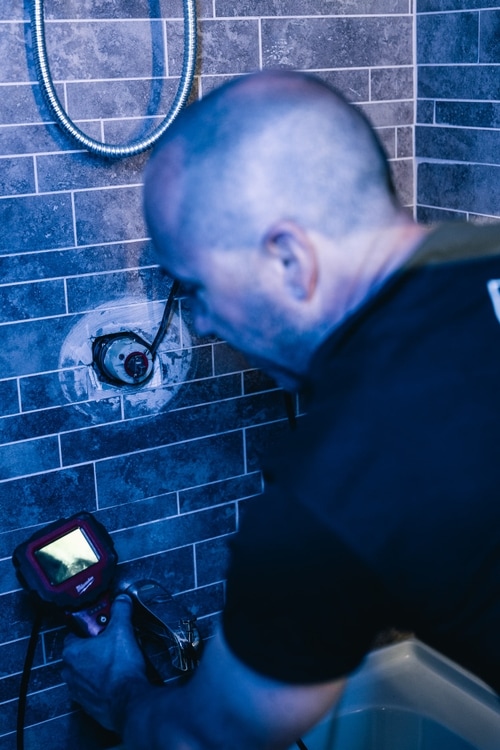
If a shower valve has been recently serviced and the handle and cartridge are functioning correctly but a moisture problem has developed in the wall, a water leak detection inspection using moisture meters and thermal imaging can locate the source without requiring destructive wall opening. Galaxy Plumbing Inc. provides emergency repairs for active in-wall supply leaks across Mississauga and the GTA.
The most effective prevention for shower valve problems is annual inspection of the shower for the early signs of cartridge wear: slight handle stiffness before it becomes grinding, minor temperature variability before it becomes a full swing, and a slightly reduced flow rate before the shower becomes noticeably weak. Catching these signs early allows for a planned cartridge replacement at low cost before the valve fails during a shower and requires urgent service.
In GTA homes with hard water, the mineral deposits that affect faucet aerators and showerheads also accumulate around the cartridge body inside the valve. According to Health Canada's guidelines on water hardness, the elevated calcium and magnesium levels typical of Ontario municipal water have measurable operational effects on residential plumbing fixtures. A whole house water treatment approach reduces scale accumulation inside the valve over time. Galaxy Plumbing Inc. serves Mississauga and the GTA for annual shower valve inspections and cartridge replacement on a planned maintenance schedule.
If the valve body inside the wall is intact and the brand and model are still in production with available replacement cartridges, a cartridge replacement is the appropriate repair. If the valve body has cracked, if the cartridge model is discontinued, or if you are upgrading from a manual mixing valve to a pressure-balancing type, a full valve replacement with wall access is required. A licensed plumber from Galaxy Plumbing Inc. identifies the valve make and model and confirms cartridge availability before recommending a repair path. Contact the team through cartridge replacement for same-day assessment.
Shower valve failure is most often caused by wear of the cartridge's internal seals and O-rings over years of daily use. Hard GTA water accelerates this wear by depositing mineral scale around the cartridge body, increasing the friction required to operate the handle and degrading the seating surfaces. Pressure fluctuations in the supply system also stress the cartridge over time. Most shower cartridges have a service life of 7 to 15 years depending on usage and water quality. Replacing the cartridge when early wear symptoms appear avoids a full valve failure. For supply-side concerns, a supply line assessment identifies any pressure issues contributing to premature wear.
Replacing a shower cartridge inside an existing valve body does not require a building permit in Ontario. A full shower valve body replacement that requires opening the wall and modifying the supply connections may require a permit depending on the municipality and the scope of the work. Galaxy Plumbing Inc. confirms permit requirements before beginning any shower valve replacement that involves supply line modification. The Ontario Building Code requires pressure-balancing protection on all new shower installations, which the team ensures is in place when replacing an older manual mixing valve.
Ontario homeowners can legally perform cartridge replacement on their own principal residence without a licence. However, the cartridge must exactly match the valve brand and model, the supply must be fully shut off before starting, and the cartridge must be oriented correctly on reinstallation. An incorrectly installed cartridge produces reversed hot and cold operation or fails to seal. When the cartridge is seized by mineral scale and cannot be extracted without a specialty puller tool, professional service is needed. Contact Mississauga-based Galaxy Plumbing Inc. for cartridge replacement when the DIY approach hits an obstacle.
Shower valve cartridge replacement in the GTA is a standard service call cost covering the plumber's time to diagnose, remove, and replace the cartridge plus the part itself. Most name-brand cartridges for common shower valve models are stocked on the service vehicle, enabling completion in a single visit. Full valve body replacement is a larger job involving wall access and costs more than a cartridge replacement. Galaxy Plumbing Inc. provides upfront pricing for both repair scenarios and can schedule emergency repairs when a shower valve failure or in-wall leak requires same-day service.
A failing shower valve only worsens over time and can develop into a supply leak inside the wall if the cartridge fails completely. Galaxy Plumbing Inc. repairs and replaces shower valves across Mississauga, Toronto, Scarborough, Etobicoke, and Oakville with licensed plumbing work, brand-matched cartridges on the service vehicle, and upfront pricing on every call. Contact us to schedule a shower valve assessment and get your temperature control and flow restored.