A shower drain that stops draining has an obstruction preventing wastewater from moving freely through the drain assembly and into the branch line. The obstruction is almost always physical material that has accumulated over time rather than a sudden failure. Hair is the primary cause in most GTA households: shower hair binds together inside the drain strainer, the P-trap throat, or on the standpipe below the drain body, creating a mesh that catches soap scum, shampoo residue, and conditioner buildup until the restriction becomes a full block.
Soap scum accelerates this process in GTA homes because Mississauga-area municipal water is moderately hard. Dissolved minerals react with soap to form a sticky residue that coats the interior of the drain and the hair mass, making the blockage denser and harder to clear over time. According to Environment Canada, hard water impacts are significant across southern Ontario, affecting both residential plumbing fixtures and drain performance.
A slow shower drain pools water around your feet during a shower but clears within a few minutes after the water is turned off. This indicates a partial blockage that is restricting flow rather than stopping it completely. A fully blocked shower drain holds water that does not clear even after several minutes or longer, eventually requiring you to step out of standing water.
Gurgling sounds from the shower drain when other fixtures are used, or when the toilet is flushed, indicate that the blockage may be in the branch drain line rather than just at the shower drain itself. This distinction matters because a branch line block requires professional clearing with a snake that reaches beyond the drain assembly into the wall. Professional drain snaking is the appropriate tool for obstructions beyond the P-trap.
Clearing a shower drain that has stopped draining is often within a homeowner's ability when the blockage is at the strainer or in the P-trap. Remove the drain cover and use a drain hair removal tool or a pair of needle-nose pliers to pull the hair mass up and out. This single step resolves the majority of slow shower drains. Clean the drain cover of soap scum buildup before replacing it.
If removing the strainer and clearing accessible hair does not restore flow, the blockage is deeper in the P-trap or the branch line. At this stage, a standard plunger is unlikely to clear the obstruction effectively because hair tangles do not respond to pressure the way softer blockages do. A professional drain snake reaches the necessary depth to break up and extract the plug. The Ontario Building Code requires shower drain assemblies to maintain a specific minimum flow rate, which a professional clearing can restore.
A shower drain that does not drain is a drain blockage issue. A shower that produces weak flow, inconsistent temperature, or drips when turned off is a shower valve or cartridge issue. These are distinct problems requiring different repairs. It is common for homeowners to conflate them because both affect the shower experience, but clearing the drain does not fix a failing cartridge, and replacing the cartridge does not clear a blocked drain.
If your shower produces good water flow but the water pools and does not drain, the problem is in the drain assembly or drain line. If the flow itself is weak or the temperature control is inconsistent, the cartridge inside the shower valve body may need replacement. Galaxy Plumbing Inc. handles both drain clearing and cartridge replacement for showers, often in the same service visit when both issues are present.
Older GTA homes built before the 1970s often have cast iron or clay branch drain lines. Cast iron shower drains accumulate soap scum and mineral deposits faster than modern PVC because of the rougher pipe surface. Clay drain lines in older Mississauga and Toronto homes can develop root intrusion, joint displacement, and partial collapse that affects all fixtures connected to that branch, including the shower drain.
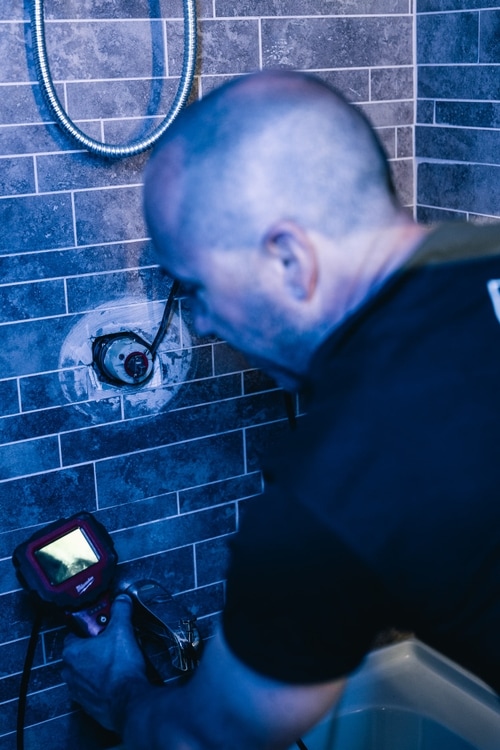
A shower drain in an older home that responds to clearing but plugs again within weeks rather than months is almost certainly dealing with a pipe condition issue rather than an accumulation problem. A drain camera inspection of the branch line identifies whether the pipe wall has been compromised, whether root intrusion is present, or whether a corroded P-trap is catching hair faster than normal.
A shower drain backup becomes an emergency when sewage or wastewater backs up from the drain rather than simply failing to drain away. If foul-smelling water rises from the shower drain when other fixtures are used, the main drain line is likely blocked and is being overpressured by use elsewhere in the home. This situation requires immediate professional intervention to prevent sewage from entering the living space.
Galaxy Plumbing Inc. provides 24/7 emergency repairs across Mississauga and the GTA for main line backups and sewage emergencies. A blocked main line affecting the shower drain is not a situation to wait on as it can cause sewage to emerge from the lowest drain in the home, typically a basement floor drain or a ground-level shower.
The most effective shower drain prevention measures are a quality drain hair catcher installed over the drain opening, weekly removal of caught hair from the strainer, and a monthly rinse of the drain with boiling water to soften soap scum before it hardens. These three habits reduce the frequency of professional clearing significantly for most households.
In homes with hard Region of Peel municipal water, the drain interior will still accumulate mineral scale regardless of hair management. Annual professional drain cleaning removes this mineral layer before it reaches a flow-restricting thickness. Galaxy Plumbing Inc. also serves Mississauga and surrounding GTA areas for annual drain maintenance as part of whole-home plumbing service visits.
Hair accumulation is the most common reason a shower drain stops working in GTA homes. Over weeks and months, shed hair binds together at the drain strainer or P-trap, catching soap scum and shampoo residue until the mass is large enough to block flow completely. Most shower drain blockages can be prevented with a drain hair catcher and weekly strainer cleaning. Professional drain snaking is needed when the blockage is in the P-trap or the branch drain line.
A venting problem produces gurgling or bubbling sounds from the shower drain when other fixtures are used, particularly when the toilet is flushed or the washing machine drains. A simple drain blockage does not usually produce sounds from other fixtures. Both conditions can cause slow or stopped drainage. If gurgling is present alongside slow drainage, a drain camera inspection and vent assessment by a licensed plumber is the right diagnostic step.
A plunger can be used on a shower drain but is rarely effective on hair blockages because hair tangles do not respond to air pressure the way softer clogs do. A plunger may work on a soap scum blockage with no hair involved, but most shower drain plugs are primarily hair. The more effective homeowner tool is a drain hair removal hook or a flexible drain snake. When these do not restore flow, contact Galaxy Plumbing for professional drain clearing with a motorized snake.
A shower drain that smells without being fully blocked usually has a hair and soap scum mass in the P-trap that is fermenting rather than flushing through. The P-trap also prevents sewer gas from entering the home when it holds its water seal, but a partial blockage of organic material in the trap creates odour directly. Removing and cleaning the drain strainer and using a drain hair tool to pull out the P-trap contents typically resolves the odour. If the smell persists, contact Mississauga-based Galaxy Plumbing Inc. for a full drain assessment.
Most shower drain clearings take one hour or less from the start of the service visit. If the blockage is in the P-trap or the short section of drain line just inside the wall, a professional electric drain snake clears it quickly. The time extends when the blockage is deeper in the branch line or when a camera inspection is needed to locate a recurring obstruction. Galaxy Plumbing Inc. provides upfront pricing before any clearing begins and handles emergency repairs around the clock when shower drain backups escalate.
A shower drain that does not drain will worsen into a standing water problem and can point to larger drain line issues in older GTA homes. Galaxy Plumbing Inc. clears blocked shower drains across Mississauga, Toronto, Scarborough, Etobicoke, and Oakville with professional drain snaking, camera inspection, and upfront pricing. Contact us to schedule a same-day shower drain assessment and restore proper flow.